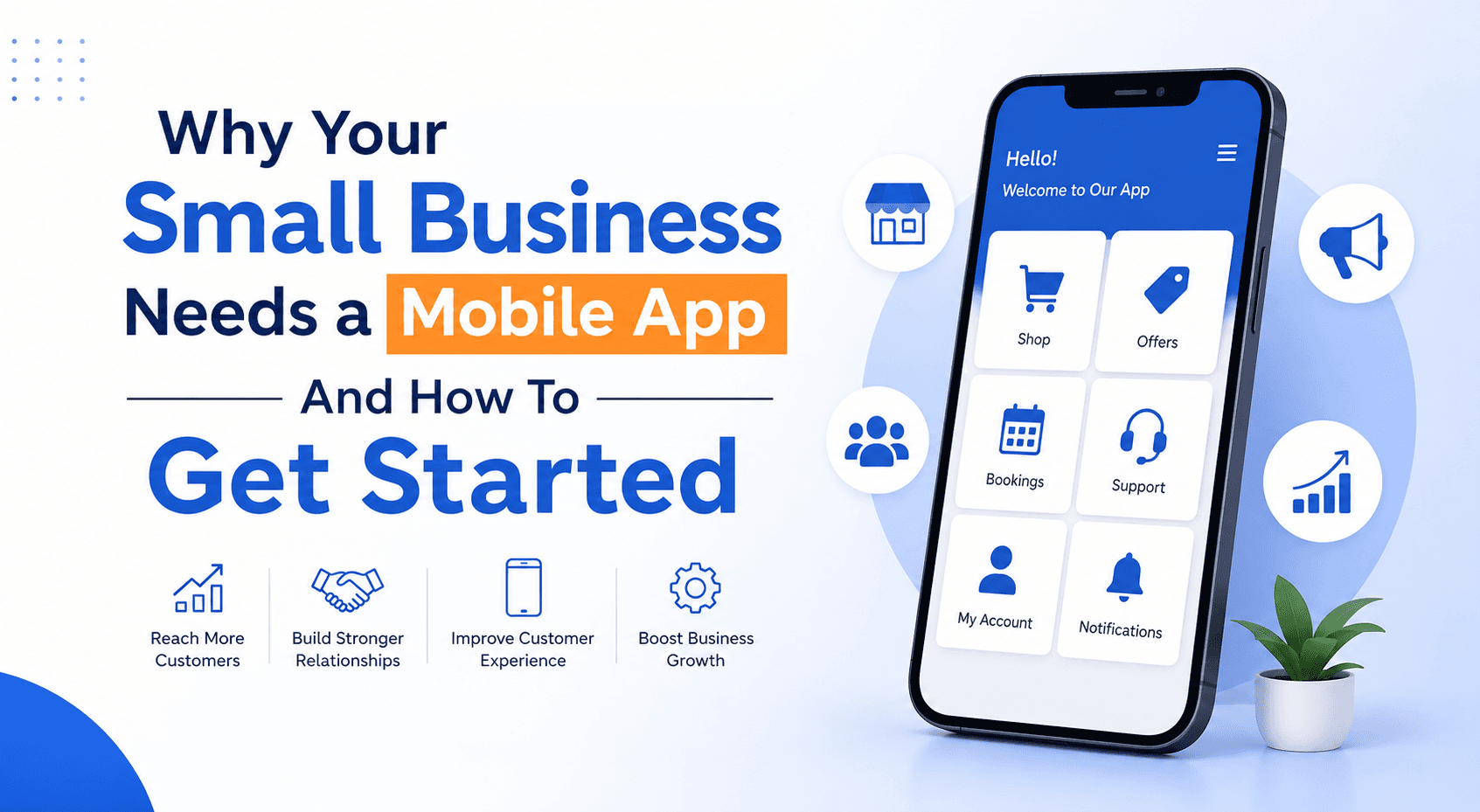
Not long ago, a mobile app was something only big brands could afford.
Today, a customer expects to find your business on their phone just as easily
as they'd walk into your store. If they can't order, book, or browse from their pocket, there's a good chance they'll find a competitor who lets them.
That shift has quietly changed the rules for small businesses and startups. A mobile app is no longer a "nice to have" reserved for enterprise budgets — it's becoming a basic expectation, much like having a website was a decade ago. The good news is that building one is far more accessible than it used to be, whether you go custom, no-code, or somewhere in between. This guide walks through why a mobile app matters, where it fits in different industries, and how to actually build one without losing your shirt in the process.
Benefits of a Mobile App for Your Startup or Small Business
The case for a mobile app isn't just about looking modern. It's about function.
Direct access to customers. An app sits on a customer's home screen, which means your business gets a permanent spot in their daily routine — no algorithm or ad spend required to be seen.
Push notifications. Unlike email, which gets buried, or social media, which is filtered by algorithms, push notifications land directly on a screen the customer checks dozens of times a day.
Loyalty and repeat business. Apps make it easy to build in loyalty points, order history, and personalized offers — all things that keep people coming back.
Faster transactions. Saved payment details and streamlined checkouts reduce friction, which usually means more completed purchases.
Brand credibility. A polished app signals that a business is established and serious, even if it's just two people working out of a garage.
Data you actually own. Unlike relying solely on third-party platforms, an app gives you first-party data on how customers behave, what they buy, and what they ignore.
None of this means every business needs an app on day one. But for businesses with repeat customers, appointment bookings, or a product catalogue, the return often shows up quickly.
Industries Where Mobile Apps Are Booming
Some sectors have seen mobile adoption explode faster than others:
Food and beverage — ordering, delivery tracking, and loyalty rewards are now table stakes for restaurants and cafes.
Fitness and wellness — class bookings, workout tracking, and membership management keep gyms and studios competitive.
Retail and e-commerce — mobile-first shopping, wish lists, and personalized recommendations drive a growing share of sales.
Healthcare — appointment scheduling, telehealth, and patient portals are increasingly expected rather than optional.
Home services — booking, dispatch tracking, and invoicing apps have professionalized everything from plumbing to pet grooming.
Real estate — listing browsers, virtual tours, and instant agent messaging have become standard.
If your business falls into one of these categories, customers may already be looking for you on their phones, whether or not you've built anything for them yet.
Mobile Apps: Building vs. Buying (or Using No-Code Tools)
Once you've decided an app makes sense, the next decision is how to build it.
The Custom-Build Challenge
Hiring developers to build a fully custom app gives you maximum flexibility and a unique experience. It also comes with real trade-offs: higher upfront cost, longer timelines, and ongoing maintenance as operating systems and devices change. For a small business testing an idea, this route can be overkill — and risky if the concept isn't validated yet.
The No-Code Alternative
No-code and low-code platforms let you assemble an app using visual builders instead of writing code from scratch. This route is faster and cheaper, and it's a solid way to test whether an app resonates with customers before investing heavily. The trade-off is less customization and, in some cases, limits on how the app can scale or integrate with specialized tools.
Ready-Made Solutions That Scale
Between fully custom and no-code sits a middle ground: white-label or template-based platforms built for specific industries (restaurants, fitness studios, retail) that still allow branding and some customization. These can offer a faster path to a professional-feeling app without starting from a blank canvas, and many are built to scale as the business grows.
Your Roadmap to Building a Mobile App
Step 1: Define the Purpose of Your App
Before anything else, get specific about the problem the app solves. Is it to reduce phone-in orders? Simplify bookings? Build loyalty? A clear purpose keeps the project focused and prevents feature creep later.
Step 2: Choose Your Development Approach
Weigh custom development, no-code tools, and ready-made platforms against your budget, timeline, and how much customization you actually need. Many small businesses start lean and upgrade later once the app proves its value.
Step 3: Design Core Features and User Experience
Resist the urge to build everything at once. Identify the two or three features customers will use constantly — ordering, booking, messaging — and make sure those work flawlessly before adding anything else. A simple app that works well beats a complex one that frustrates users.
Step 4: Launch, Market, and Maintain Your App
Launching is the beginning, not the finish line. Plan for regular updates, bug fixes, and compatibility changes as new phone models and OS versions roll out. Budget time and money for this ongoing upkeep from the start.
Integrating Your Mobile App With Business Tools and CRM
An app that operates in isolation misses much of its value. Connecting it to your CRM, point-of-sale system, email marketing tools, and inventory management means customer data flows in one direction instead of living in scattered spreadsheets. This integration is what turns an app from a standalone tool into a genuine extension of how the business runs — every order, booking, or inquiry automatically updates the systems your team already uses.
How AI Can Help Build and Grow Your Mobile App
AI has lowered the barrier to entry on both the building and growing sides of app development. On the build side, AI-assisted coding tools and app builders can generate functional prototypes in a fraction of the time it used to take, letting small teams move from idea to working app much faster. On the growth side, AI can power personalized recommendations, automate customer support through chatbots, analyze usage patterns to flag what's working, and even help write and test push notification copy. None of this replaces good judgment about what your customers actually want, but it does mean small teams can now do things that used to require dedicated specialists.
Marketing Your Mobile App for Long-Term Success
Building the app is only half the battle — getting people to download and keep using it is the other. A few approaches that consistently work:
Promote the app across existing channels: website, email list, social media, and in-store signage.
Offer a first-download incentive, like a discount or bonus loyalty points.
Use App Store Optimization (ASO) — the right title, keywords, and screenshots make a real difference in discoverability.
Encourage reviews early, since ratings heavily influence whether new users trust and download an app.
Keep users engaged after the first download with relevant push notifications, not just promotional noise.
Marketing an app is an ongoing effort, not a one-time launch campaign. The businesses that see the best long-term results treat their app like a living product that needs continued attention.
Common Mistakes to Avoid When Developing a Mobile App
Building without a clear purpose, resulting in an app that does a little of everything and nothing particularly well.
Overloading the first version with features instead of starting lean and expanding based on real feedback.
Ignoring performance and load times, which are among the fastest ways to lose frustrated users.
Skipping user testing before launch, leading to usability issues that could have been caught early.
Underestimating maintenance costs, since an app requires ongoing updates long after the initial launch.
Neglecting marketing, assuming that simply having an app in the store will generate downloads on its own.
Conclusion
A mobile app isn't a guaranteed shortcut to growth, but for many small businesses and startups it's become a genuine competitive advantage — and increasingly, a basic expectation from customers. The path to building one no longer requires a massive budget or a technical co-founder; it requires a clear purpose, a realistic approach to development, and a commitment to maintaining and marketing the app once it's live. Start with what your customers actually need, choose the build approach that matches your resources, and treat the launch as the start of an ongoing relationship rather than the finish line.