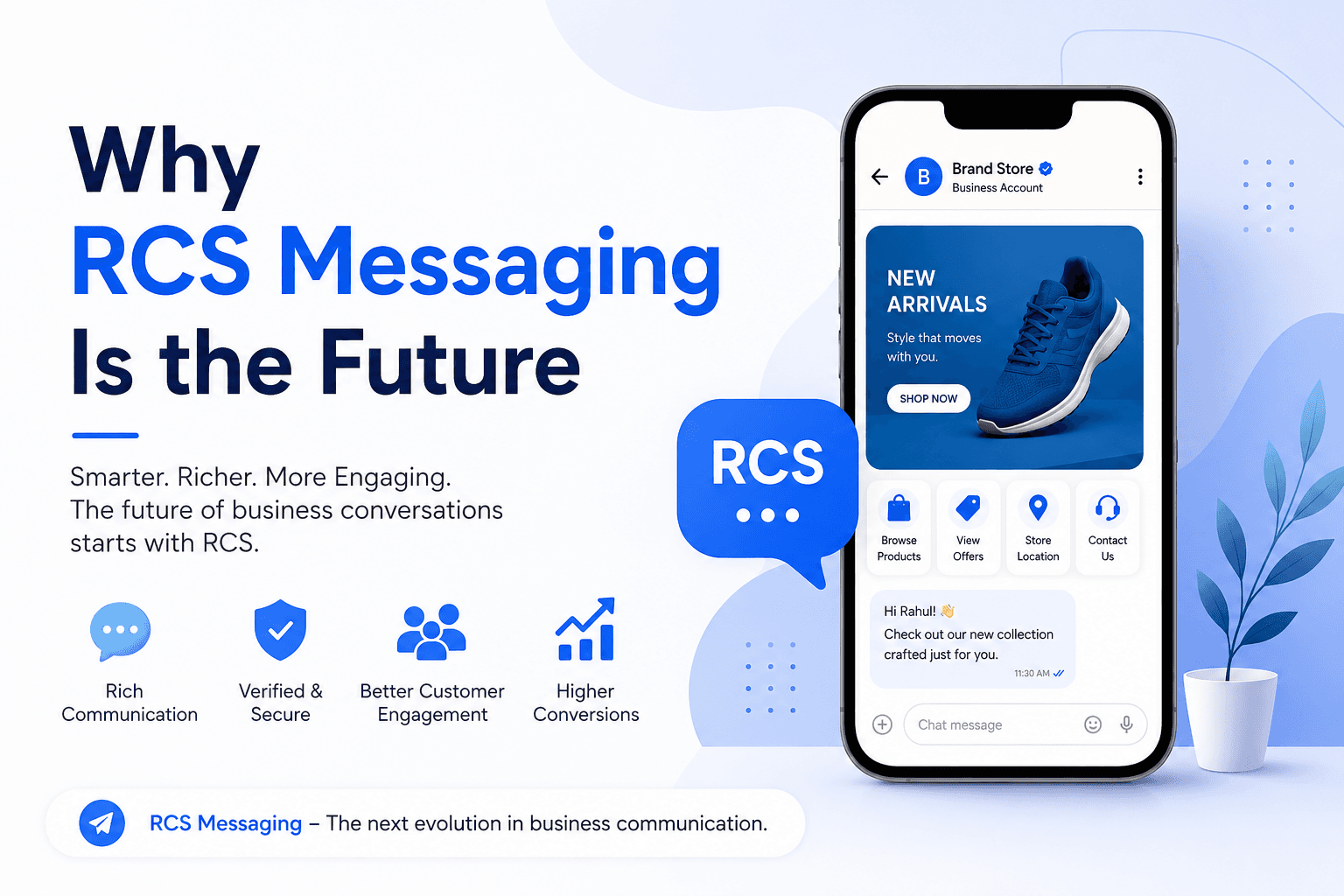
For nearly two decades, SMS has been the default way businesses reach customers on their phones. It's reliable, it's universal, and it's also stuck in the past — 160 characters, no images, no read receipts, no way to know if anyone even saw your message. Rich Communication Services (RCS) changes that equation. Built on an open GSMA standard and now supported natively by both Android and, since late 2024, Apple's iOS, RCS turns the default messaging inbox into an interactive, branded, media-rich channel. What was once a fragmented, carrier-by-carrier rollout has become mainstream infrastructure, and businesses that adapt early are positioned to capture a level of engagement that SMS simply can't deliver. Here's why RCS deserves a central place in your messaging strategy.
The Strategic Case for RCS: A Premium Messaging Channel
RCS isn't just SMS with a fresh coat of paint — it's a fundamentally different kind of channel. Verified sender profiles, branded logos, high-resolution images and video, interactive buttons, and real-time delivery and read receipts all come standard. That means a customer opening a message from your business sees your logo and name clearly, not an anonymous ten-digit number that looks like spam. This single change addresses one of the biggest weaknesses of SMS marketing: trust. When customers know exactly who's messaging them, they're far more likely to engage, and businesses gain a channel that feels premium without needing to build or promote a separate app. That positions RCS as a strategic upgrade rather than a mere feature add-on — a channel worth budgeting and planning around the same way marketers already do for email and paid social.
RCS as a Driver for Better Customer Engagement
The engagement numbers behind RCS are hard to ignore. Rich, interactive formats consistently outperform plain text: RCS campaigns are commonly reported to generate multiples of the click-through and conversion rates of standard SMS, thanks to embedded carousels, quick-reply buttons, and native media that let customers act without leaving the conversation. Instead of a link that opens a browser, a customer can browse products, pick a size, confirm an appointment, or track a delivery directly inside the message thread. This lowers friction at exactly the moment intent is highest. For marketers and customer service teams alike, that translates into fewer drop-offs, faster response times, and conversations that feel less like a broadcast and more like a two-way exchange — which is precisely what modern customers expect from every brand touchpoint.
Building Loyalty and Trust with RCS Marketing
Loyalty isn't built through a single flashy campaign; it's built through consistent, respectful, recognizable communication. RCS supports that in ways SMS structurally cannot. Verified branding reduces the ambiguity that breeds spam suspicion, while read receipts and typing indicators create a sense of a real, responsive conversation rather than a one-way blast. Businesses can also layer in richer post-purchase experiences — order confirmations with tracking maps, personalized offers with product imagery, or simple satisfaction surveys with tap-to-respond buttons — all of which reinforce that a brand is attentive and easy to reach. Over time, this consistency does the quiet work of loyalty building: customers come to associate a business's messages with clarity and value instead of noise, and that reputation compounds with every interaction.
RCS for End-to-End Customer Journeys
Perhaps the most underappreciated strength of RCS is its ability to support an entire customer journey inside one channel. A single RCS thread can carry a customer from initial product discovery, through a carousel of options, into a purchase confirmation, a shipping update, a delivery notification, and finally a post-purchase support conversation — without ever asking the customer to switch to email, an app, or a phone call. That continuity matters. Every hand-off between channels is a chance for a customer to lose interest or forget the context of their inquiry. By consolidating the journey into a single, persistent, rich thread, RCS reduces friction at every stage and gives businesses a unified record of the relationship, which also makes customer service faster and more informed when a human eventually needs to step in.
The RCS Opportunity: Industry Momentum and Ecosystem Growth
The momentum behind RCS is no longer speculative — it's structural. Apple's introduction of RCS support in iOS 18 in late 2024 removed the last major barrier to universal adoption, effectively closing the gap between Android and iPhone messaging experiences. Since then, growth has accelerated sharply: industry researchers have tracked RCS user bases climbing into the billions, with continued expansion expected as carrier support broadens across more markets. Analysts also project RCS business messaging revenue to grow substantially over the next several years as more mobile operators enable the standard and more brands launch verified RCS agents. In several markets, RCS penetration has already begun to rival or exceed established OTT messaging apps. This is an ecosystem inflection point, the kind that happened for mobile apps in the early 2010s and for social messaging before that — early movers stand to benefit disproportionately.
Why Now Is the Time for RCS
Waiting on RCS is no longer a neutral choice — it's a competitive one. Customers are already receiving richer messaging experiences from the brands that have adopted RCS, and that raises the baseline expectation for everyone else. At the same time, the infrastructure to support RCS has matured: major messaging platforms and CPaaS providers now offer straightforward tools for launching verified RCS agents, tracking performance, and falling back gracefully to SMS where RCS isn't yet supported. That means the technical and operational barriers that once made RCS a niche, carrier-dependent gamble have largely disappeared. Businesses that wait for "full" universal support risk ceding the engagement advantage to competitors who are already building trust and driving conversions through richer conversations today.
Step Into the Future with RCS
SMS got businesses through the last two decades of mobile messaging, but it was never built for the expectations customers carry today — verified identity, rich media, real-time responsiveness, and conversational continuity. RCS delivers all of that, natively, inside the inbox every customer already checks dozens of times a day. With Apple and Android now aligned, carrier support expanding, and adoption accelerating across every major market, RCS has moved from an interesting experiment to a core channel for customer engagement. The businesses that step into this shift now — rethinking their messaging strategy around rich, branded, interactive conversations — will be the ones setting the standard for customer experience in the years ahead. The future of messaging is already here; the only question is who adopts it first.