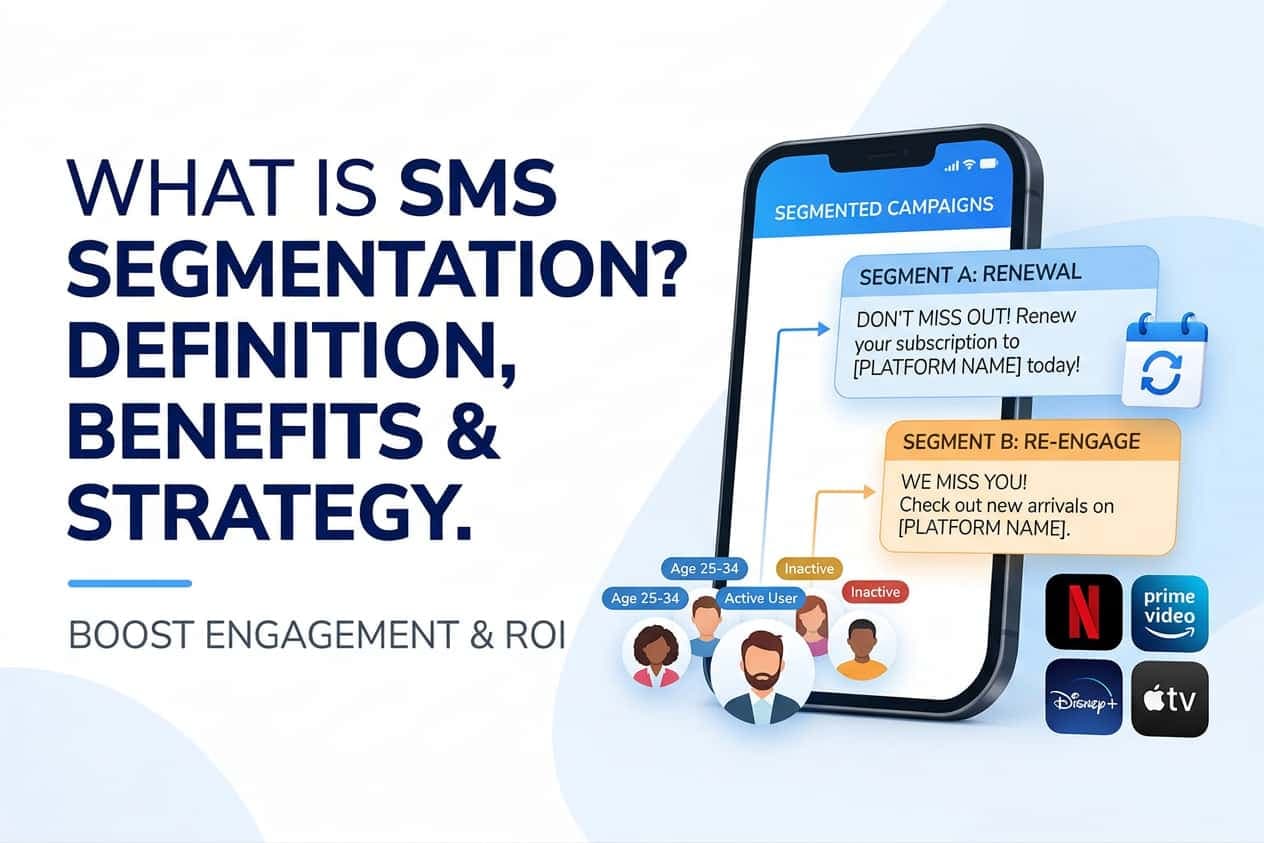
What Is SMS Segmentation?
SMS segmentation is the practice of splitting your subscriber list into smaller groups so each group receives a message written for them, at a time that suits them. Instead of sending one identical text to every number you hold, you sort contacts by shared traits such as where they live, what they bought, how recently they engaged, or which stage of the customer relationship they are in. The goal is simple: make each message feel relevant to the person reading it.
One point of confusion is worth clearing up early. People who search for "SMS segments" are often asking how a long text gets split into several billable parts because of character limits. That is a technical billing topic. SMS segmentation as covered here is an audience strategy topic, and the two have nothing to do with each other beyond the similar name.
Why It Changes Results
A text message arrives on a personal device and is usually read within minutes. That immediacy cuts both ways. A relevant message gets acted on quickly, while an irrelevant one gets deleted or, worse, triggers an opt-out. Unlike an email subscriber who may quietly ignore you for months, a person who replies STOP is gone for good. Segmentation protects your list by making sure people mostly receive messages they have a reason to care about.
It also improves the economics. Every message has a cost, so sending a premium offer to people who have never bought premium products is simply wasted spend. Segmentation lets you direct your best offers to the people most likely to use them and send lighter, cheaper nudges to everyone else.
The Main Segmentation Models
Geographic and demographic segmentation uses city, language, and basic profile data. It suits store openings, regional events, and multilingual campaigns. Behavioral segmentation uses actions: purchased in the last 30 days, abandoned a cart, clicked the last message, redeemed a coupon. Lifecycle segmentation focuses on relationship stage: new subscriber, first-time buyer, repeat customer, lapsing, lapsed. Preference segmentation uses what people told you they want, such as the product category they picked at signup.
A Worked Example Using RFM
RFM stands for recency, frequency, and monetary value, and it is one of the most practical ways to segment without advanced tools. Imagine a small online electronics accessory shop with 6,000 subscribers. Each customer is scored from 1 to 3 on how recently they bought, how often, and how much they spent in total. A customer who bought last week, has ordered five times, and spends well above average scores 3-3-3. A customer who bought once eight months ago for a small amount scores 1-1-1.
From those scores you can form four working groups. Champions (high on all three) receive early access to new products and no discounts, because they already buy. Promising newcomers (recent but low frequency) receive a follow-up that encourages a second purchase. At-risk customers (previously frequent, now quiet) receive a win-back message that references their past orders. Lost customers (low on everything) receive one final low-cost reactivation attempt and are then removed from regular sends to protect list quality. Notice that the same list has produced four different strategies, which is exactly the point.
Sample Messages for Different Segments
A message to a champion might read: "Hi Ravi, the new fast-charge range is live and you get 24-hour early access before it opens to everyone. Browse here: [link]. Reply STOP to opt out." A message to an at-risk customer might read: "Hi Ravi, it has been a while since your last order of the 20W charger. Here is free delivery on your next one this week: [link]." A message to a new subscriber might read: "Welcome to the shop, Ravi. Here is what most first-time buyers pick: [link]." Each message references a real relationship with the brand, which is what makes it work.
Common Mistakes
The most frequent error is creating too many segments. Twenty micro-groups of a few dozen people each create more work than insight, and results become statistically meaningless. Start with four to six. The second error is using stale data: a customer who bought yesterday should not still be receiving a "welcome" sequence tomorrow. The third error is segmenting without measuring. Always compare a segmented send against a generic baseline so you know the effort is paying off. The fourth is ignoring consent differences, since contacts who opted in for order updates only should not be placed in promotional segments.
Frequently Asked Questions
How big should a segment be?
Large enough that you can draw a reliable conclusion from its results. As a rough guide, a few hundred contacts per segment is a workable minimum for comparing performance, though smaller groups are fine for high-touch messages where you are not testing.
Do I need special software?
No. A spreadsheet with purchase date, order count, and total spend is enough to build your first RFM groups. Dedicated platforms simply automate moving contacts between groups.
How often should I update segments?
Ideally continuously through automation, and at minimum before every major campaign, so the groups reflect current behavior.
Conclusion
SMS segmentation is less about technology and more about discipline: knowing who is on your list, what they have done, and what they need to hear next. Start with a handful of clear segments, such as new subscribers, active customers, at-risk customers, and lapsed ones, write distinct messages for each, and compare the results against a generic send. The improvement in clicks and the reduction in opt-outs will show you where to refine next.