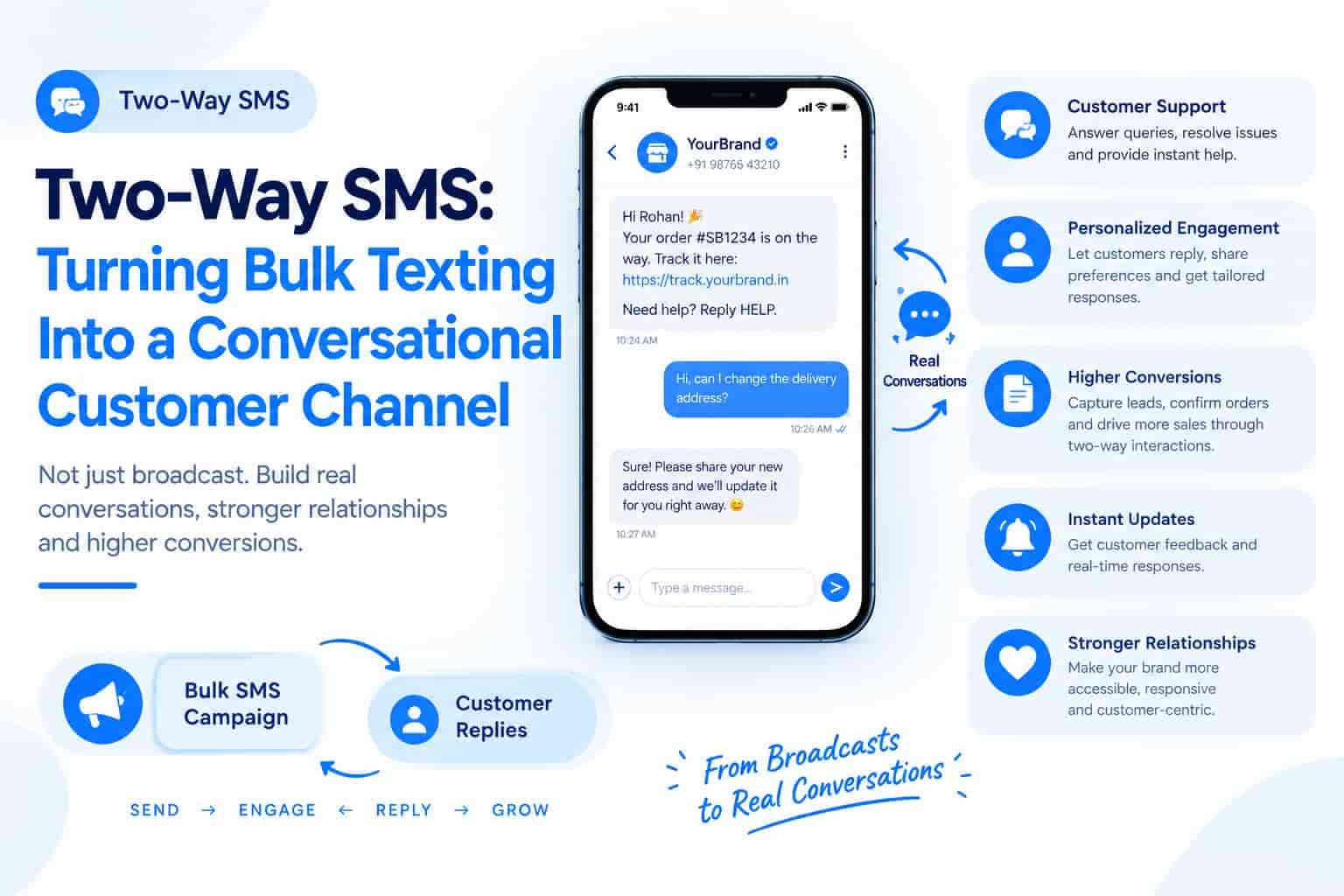
From One-Way Blast to Two-Way Conversation
For years, bulk SMS meant a one-directional blast: a business sends a message, and the customer either acts on it or ignores it. In 2026, that model is shifting. Two-way SMS lets customers reply directly to a message, turning a broadcast channel into a genuine conversation — and customers now expect it, having grown accustomed to instant replies across every other digital channel they use.
The days of impersonal "do-not-reply" texts are fading. Businesses that enable replies are seeing stronger retention and satisfaction, simply because customers feel heard rather than talked at, and can resolve simple questions without switching to a phone call or app.
Practical Ways Businesses Use Two-Way SMS
Two-way SMS unlocks several use cases that a one-way blast can't support:
Customer support: Quick questions answered by reply instead of a phone queue
Feedback collection: "Reply 1–5 to rate your experience" after a purchase or visit
Appointment management: "Reply C to confirm or R to reschedule"
Opt-out handling: Automatic processing of STOP replies to stay compliant
Order modifications: "Reply CANCEL within 10 minutes to cancel this order"
Each of these reduces friction for the customer while giving the business structured, actionable data in return, often resolving in a single reply what would otherwise take a multi-minute phone call.
Setting Up Two-Way SMS the Right Way
Implementing two-way SMS requires a dedicated number or short code capable of receiving inbound messages, plus a system to route replies to the right team or automation flow. Simple keyword-based routing — where specific reply words trigger specific actions — is often enough to handle the majority of common responses without needing complex natural language processing or a large support team monitoring every incoming text.
It's important to set expectations clearly in the outbound message, so customers know a reply will actually be read and acted on, rather than disappearing into a void. A message that says "Reply YES to confirm" only works if the system genuinely processes that reply — anything less erodes trust quickly.
Combining Automation With Human Escalation
Not every reply can or should be handled automatically. A well-designed two-way SMS system routes simple, predictable responses — confirmations, ratings, keyword commands — through automation, while flagging anything unexpected or complex for a human agent to review. This hybrid approach keeps response times fast for routine queries while ensuring genuine customer concerns don't get lost in an automated loop.
Setting clear escalation rules, such as forwarding any reply containing words like "refund" or "complaint" directly to a support team, helps strike this balance without requiring every single message to be manually reviewed.
Measuring the Impact of Two-Way SMS
Businesses that switch on two-way SMS often see a measurable drop in support call volume, since many simple queries get resolved by text instead. Reply rates themselves are also a useful engagement metric — a high reply rate on feedback requests, for instance, signals that customers feel comfortable and willing to engage with your brand through this channel.
Conclusion
Two-way SMS represents the next stage of maturity for bulk texting — moving from broadcast to genuine dialogue. Businesses that enable replies for support, feedback, and confirmations build stronger relationships with customers who feel their response matters, while reducing pressure on traditional support channels. As customer expectations continue shifting toward instant, conversational service, two-way SMS is becoming less of a differentiator and more of a baseline requirement for any serious messaging strategy.