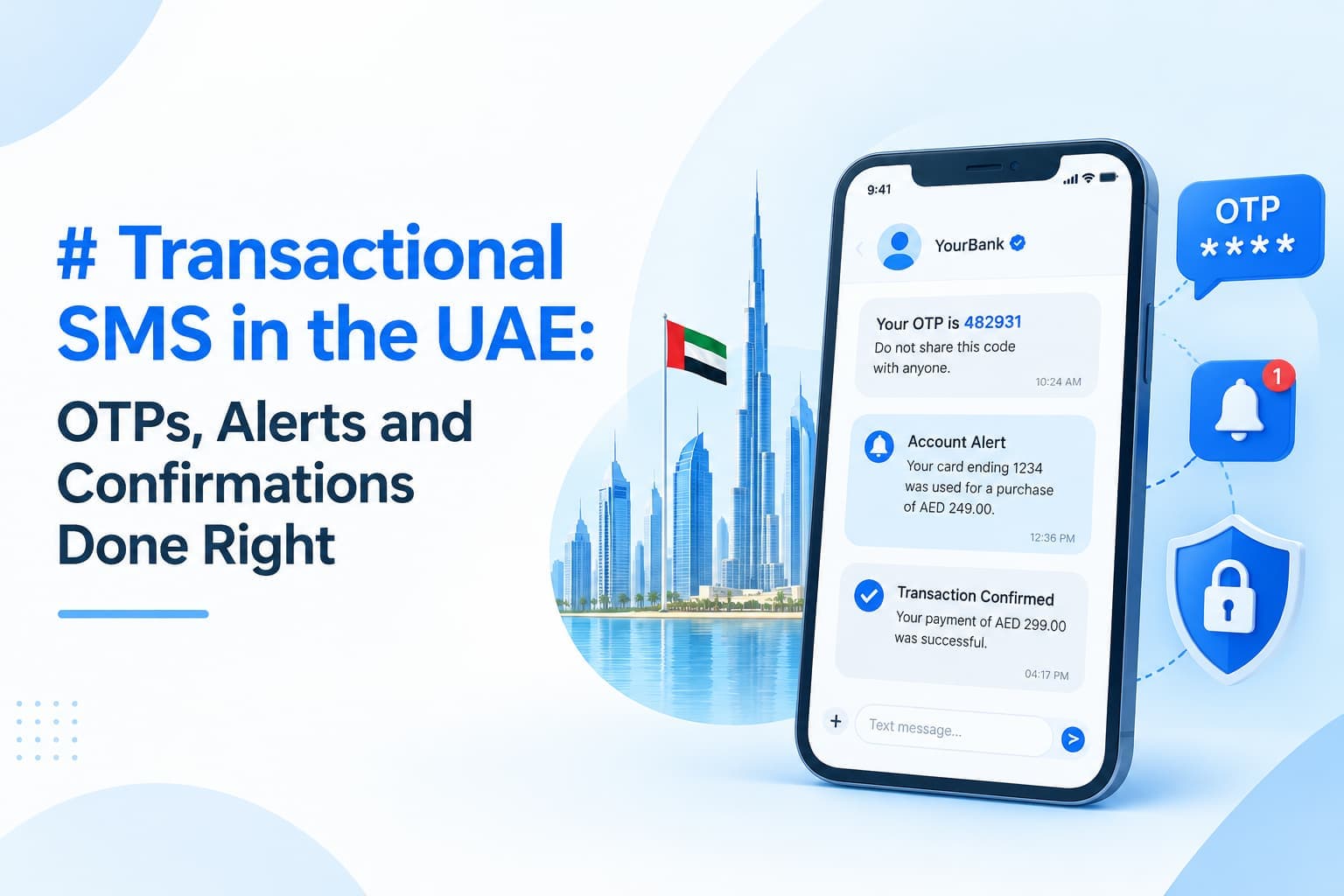
When a customer taps "Pay now" or "Log in", they expect a message within seconds. That message is a transactional SMS, and for UAE businesses it is one of the most important touchpoints in the entire customer experience. Unlike a promotion, nobody signs up for it because of an offer. Customers receive it because they just did something and need confirmation that it worked. Getting these messages right quietly protects revenue, reduces support calls and builds the kind of trust that marketing campaigns depend on.
What Is Transactional SMS?
A transactional SMS is an automated message triggered by a specific action or event involving the recipient. It carries information the customer needs rather than a sales pitch. Typical examples include one-time passwords for logins, payment confirmations, booking confirmations, delivery updates, account alerts and appointment reminders. The defining feature is that the message exists because of something the customer did, and its content is directly related to that action.
Because of this, transactional messages usually enjoy far higher open and attention rates than promotional campaigns. People are waiting for them, often with a screen open and a task half finished. That expectation is both an opportunity and a responsibility, since a delayed or confusing message is noticed immediately.
How It Differs From Promotional Messaging
The difference between transactional and promotional traffic matters for both compliance and delivery. Promotional SMS is designed to sell and is treated more strictly under UAE telecom regulation, including expectations around consent and permitted sending times. Transactional SMS is service-related and is typically routed through a separate category, often with its own approved sender ID and pre-registered templates. Providers and operators use these categories to prioritize delivery and to control abuse.
A common mistake is to add a discount or a "shop now" line to an order confirmation or an OTP. Doing so can cause a template to be rejected or reclassified, and it blurs the purpose of the message in the customer's mind. Keep service messages purely about the service, and send marketing through the correct promotional channel to customers who have agreed to receive it. Because rules and category definitions are updated from time to time, confirm the current requirements with your provider and the Telecommunications and Digital Government Regulatory Authority before launching.
Where Transactional SMS Delivers the Most Value
Authentication is the most familiar use. One-time passwords protect logins, sign-ups and high-value transactions, and they need to arrive almost instantly. Payments are a close second: receipts, failed-payment notices and refund confirmations reassure customers that their money went where they intended, and they cut down on "did my payment go through?" calls.
Orders and logistics are another strong area. Customers who receive messages when an order is accepted, dispatched and delivered feel in control, and couriers benefit from fewer failed delivery attempts. Appointment-based businesses such as clinics, salons and service providers use confirmations and reminders to reduce no-shows. Finally, security alerts about new device logins or password changes help customers spot fraud early, which is increasingly valuable in a region with high digital payment adoption.
Writing a Clear Transactional Message
The customer should understand the message from the lock-screen preview alone. Put the most important information first, whether that is a code, an amount or a time, then add the necessary context. For an OTP, include the code, your brand name and how long the code is valid, and nothing more. Extra words only slow people down at the moment they are trying to finish a task.
Brevity also keeps costs predictable. Messages that exceed a single segment are split and billed as multiple messages, and they can occasionally arrive out of order. If your audience includes Arabic speakers, remember that Arabic text uses Unicode encoding, which allows fewer characters per segment than plain English text. Always test your exact production template in the language your customers will receive rather than assuming an English draft behaves the same way.
Security and Trust Considerations
A genuine OTP message should remind the customer not to share the code with anyone, including people claiming to represent your company. Never ask customers to reply with passwords, card numbers or identity details by SMS. Every message that breaks this rule teaches customers to accept similar requests from fraudsters, which undermines the whole channel.
A registered, consistent sender ID is equally important. When customers always see your brand name on legitimate messages, they learn what a real one looks like and can spot imitations more easily. Avoid changing sender names frequently, keep templates stable once approved, and make sure your own staff understand which messages the company actually sends.
Delivery Speed and Reliability
For transactional traffic, delay is effectively failure. A code that arrives after a minute often leads to an abandoned login and a support contact. When evaluating providers, ask about direct operator connections, average delivery times for transactional messages, availability of delivery reports and what happens when a route is congested or unavailable. A provider with automatic failover between routes is far safer for critical flows than one with a single path.
Your own product design matters as well. Let users request a new code after a sensible waiting period, limit the number of requests per number or device to prevent abuse and unexpected costs, and show clear on-screen guidance while the customer waits. A well-designed flow can make a slightly slow message feel acceptable, while a poorly designed one makes even fast delivery feel unreliable.
Measuring Performance
Treat transactional messaging like any other critical system and monitor it continuously. Delivery rate and time to deliver show whether the infrastructure is healthy. For OTPs, the completion rate, meaning codes successfully entered compared with codes requested, is the real indicator of customer experience. A high resend rate usually points to delays or confusing flows, and a rise in support tickets about missing messages is often the earliest warning of a routing problem.
Review these figures by operator and by time of day. Problems frequently affect one network or one peak period, and aggregate averages can hide them until they become serious.
Conclusion
Transactional SMS is infrastructure rather than marketing. It works best when messages are short, clear, fast and strictly limited to the service the customer just used. Keep these messages separate from promotions, use a registered sender ID, protect customers with sensible security wording, and monitor delivery as carefully as you would any other essential system. Businesses that do this well rarely get credit for it, because customers simply notice that everything works. That quiet reliability is exactly what builds long-term trust across the UAE market.