From Manual Sending to Automated Customer Journeys
Sending a single bulk SMS blast is straightforward. Building an automated system that responds to customer behavior with the right message at the right time is a different level of maturity entirely. SMS marketing automation replaces manual, one-off sends with trigger-based workflows that react to what a customer actually does, ensuring consistent, timely communication without requiring someone to manually launch each message.
What a Trigger-Based Workflow Looks Like
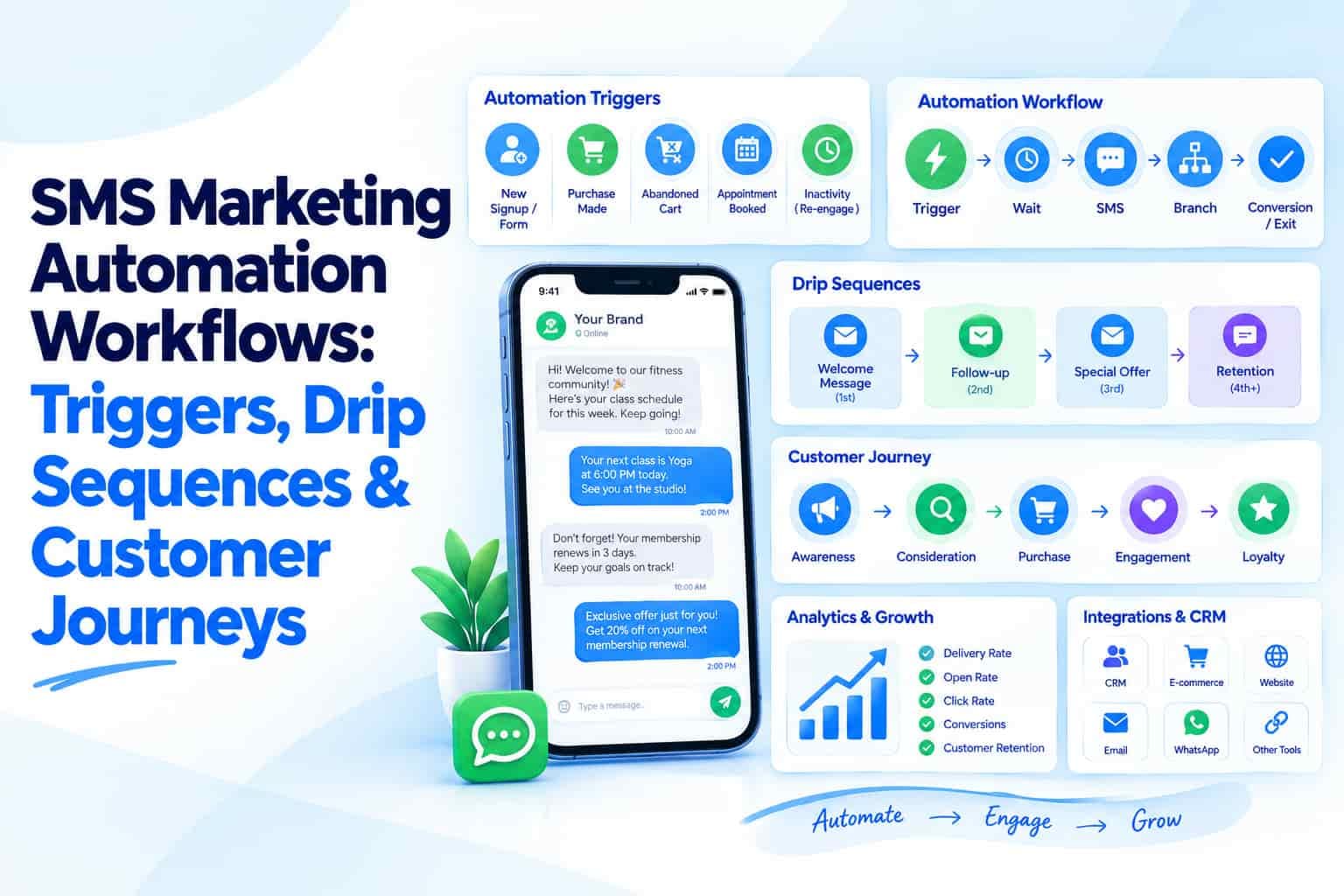
At its core, an automation workflow is a rule: when a specific event happens, send a specific message, optionally followed by more messages based on how the customer responds. Common triggers include:
Sign-up or first purchase — triggers a welcome sequence
Cart abandonment — triggers a recovery sequence
Time since last purchase — triggers a win-back message after a set inactivity period
Milestone reached — triggers a celebration or loyalty-tier message
Support ticket resolved — triggers a feedback request
Once configured, these workflows run continuously in the background, reacting to every customer's individual behavior rather than requiring a marketer to manually identify and message each qualifying contact.
Building a Welcome Sequence That Sets the Tone
The first few messages a new subscriber or customer receives disproportionately shape their perception of your SMS program. A well-built welcome sequence might include an immediate confirmation message, a follow-up a day later introducing key offers or features, and a small incentive a few days in to encourage a first purchase or deeper engagement — spaced out rather than front-loaded into a single overwhelming message.
Drip Sequences for Nurturing Over Time
Not every customer is ready to buy immediately. Drip sequences space messages over days or weeks, gradually building engagement rather than pushing for an immediate transaction. A drip sequence for a new lead might start with educational or value-focused content, move toward addressing common objections, and finally present a direct offer once enough trust and context have been established — a structure that tends to convert better than a single hard-sell message sent to someone who just discovered the brand.
Designing Journeys Around Customer Response, Not Just Time
The most effective automation doesn't just follow a fixed time-based schedule — it branches based on how the customer responds. A customer who clicks a link in the first message might skip ahead in the sequence, while one who doesn't engage at all might receive a different follow-up approach entirely. This responsive branching keeps the journey relevant to where the customer actually is, rather than pushing everyone through an identical sequence regardless of their engagement level.
Avoiding Over-Automation
Automation makes it easy to over-message customers, since workflows run continuously without the natural pacing a human sender might apply instinctively. Setting frequency caps — a maximum number of automated messages a contact can receive within a rolling window — prevents multiple overlapping workflows from accidentally bombarding the same customer with several messages in a single day.
Conclusion
SMS marketing automation turns a manual, campaign-by-campaign process into a system that responds to customer behavior continuously and consistently. Well-designed welcome sequences, drip campaigns, and response-based branching ensure every customer receives relevant messaging at the right moment in their journey, without requiring constant manual oversight. Businesses that invest in building these workflows once typically see them generate returns for months or years, making automation one of the highest-leverage investments in any serious bulk SMS program.