A Return Is a Communication Problem
For an online seller, a return is not just a parcel traveling backward. It is a stretch of uncertainty for the customer. Was my request accepted? When will someone collect the item? Did it pass inspection? When will my money come back? Every unanswered question becomes a support ticket. Well-timed SMS answers these questions before they are asked, reaches the customer instantly, and does not depend on them opening an email or logging in. This article follows the return from request to refund and shows what to send at each point.
The Return Timeline and What to Send
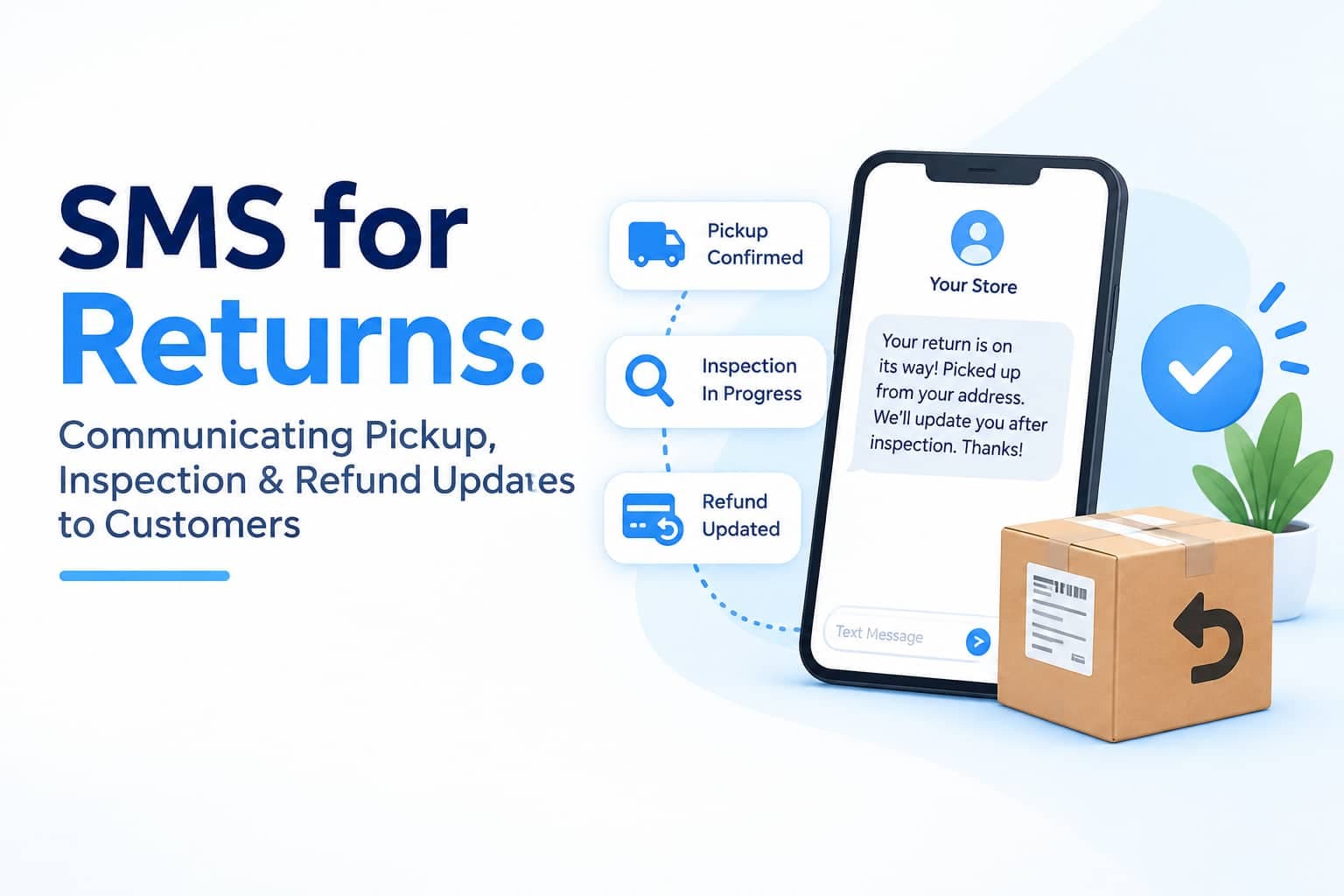
There are six moments worth a message. When the customer submits the request, send an immediate confirmation with a reference number. When the request is approved, explain how the item will be collected or where to drop it off. When pickup is scheduled, send the date and time window. When the courier collects the item, confirm it is on its way. When the warehouse receives and inspects it, share the outcome. When the refund is issued, confirm the amount and the expected timing. Skipping any of these leaves a gap in which customers start to worry.
Sample Templates
Request received: "We have received your return request RET2091 for order ORD48213. We will confirm shortly." Approved with pickup: "Your return RET2091 is approved. Pickup is scheduled for 14-Oct, 10am to 2pm. Please keep the item packed with its tags." Collected: "Your return RET2091 has been collected and is on its way to us." Refund issued: "Refund of Rs 1,499 for return RET2091 has been issued to your original payment method and may take a few business days to appear." Notice the pattern: the reference, the status, and what happens next, all in plain words.
Writing for a Slightly Frustrated Reader
Customers handling returns are often disappointed, either with the product or with the hassle. Calm, specific language helps. Avoid vague phrases such as "your request is being processed", which raise more questions than they answer. State what has happened and what will happen next, with a timeframe where possible. A named timeline, even an approximate one, lets customers plan around it, and meeting that timeline builds trust at a moment when trust is fragile.
Reducing Failed Pickups
Missed collections are one of the biggest reasons returns stall. A reminder on the evening before or the morning of collection, with the time window, reduces failed attempts noticeably. If a pickup does fail, send an immediate message with a simple way to reschedule, such as a link or a reply keyword. Two-way SMS suits this well, since the customer can reply with a preferred slot without logging into anything. This turns a failed attempt from a support call into a ten-second exchange.
Refund Messages and Honest Timelines
A refund confirmation is among the most welcome messages a customer receives. State the amount and the method. Be honest that banks and payment providers set their own timelines, and give a realistic range rather than a promise you cannot control. An honest range builds more trust than an optimistic one that is missed.
Some sellers use the refund confirmation as a gentle opportunity to ask why the item was returned, with a simple reply option. Aggregated over time, this reveals patterns, such as a size chart that is misleading or a product photo that sets the wrong expectation, and fixing those reduces future returns.
Compliance and Setup
Return updates are transactional because they follow an action the customer took, so they can generally use registered transactional sender IDs and approved templates. Keep promotional content out of them, since mixing offers into return messages can confuse recipients and, in regulated markets, risk the message being treated as promotional. Connect your returns or order management system to your SMS provider so each status change triggers the correct template automatically, and test every status, including rejected returns and failed pickups.
Handling Rejected Returns
Not every return is approved or passes inspection, and these are the messages most likely to cause anger. Be direct, respectful, and clear about the reason and the options available, such as a link to the policy or a way to contact support. A rejected-return message should never be the first time a customer hears of a problem, so send an inspection-stage update before the final outcome where you can.
Common Mistakes
Common errors include sending only one message at the end, using vague status wording, omitting reference numbers, promoting products inside return messages, forgetting to message when a pickup fails, and giving unrealistic refund timelines.
Frequently Asked Questions
How many return messages are too many?
Each message should mark a real status change. Six to seven across the whole journey is reasonable, since each answers a question the customer would otherwise ask.
Should I send these by SMS or email?
Many sellers use both, with SMS for time-critical updates like pickup reminders, and email for detailed documents.
Can customers reply?
Two-way replies are very useful for rescheduling and quick questions, provided someone or something processes the replies.
Conclusion
A well-communicated return can turn a moment of disappointment into a reason to trust your brand. Send a short, specific SMS at each stage: confirmation, approval, pickup reminder, collection, inspection result, and refund. Keep the tone calm, include a reference every time, offer two-way rescheduling, keep promotions out, and automate the flow from your order system. Customers who feel informed are far more likely to buy again.