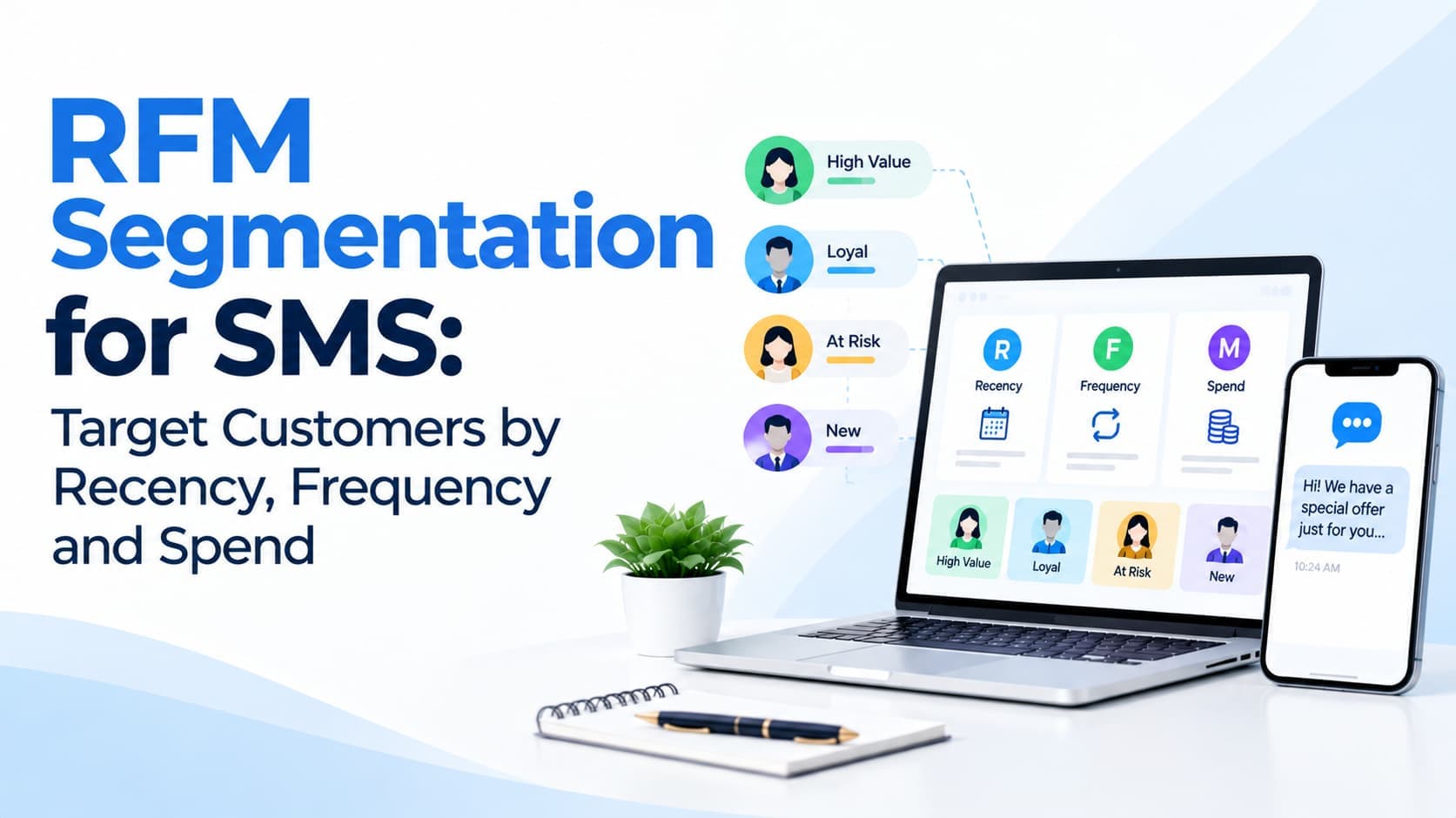
Basic SMS segmentation divides contacts by simple attributes such as city or language. Advanced segmentation looks at behavior, and one of the most practical frameworks for doing so is RFM analysis, which stands for Recency, Frequency and Monetary value. It uses data you already have to answer a valuable question: which customers should you reward, which should you nurture and which should you try to win back? This guide shows how to apply it to your SMS campaigns without needing specialist software.
What RFM Means
Recency asks how recently a customer last purchased or engaged. Frequency asks how often they have done so within a defined period. Monetary value asks how much they have spent, either in total or on average per order. Together, these three dimensions describe a customer's relationship with your business far better than a single number can.
The underlying logic is intuitive. Customers who bought recently, buy often and spend more are generally the most likely to buy again. Customers who have not engaged for a long time need a very different approach, because reminding them of products they ignored in the past is rarely effective. RFM turns that intuition into a repeatable process.
Step One: Gather the Data
For each customer, you need the date of their latest purchase, the number of purchases in a chosen period and the total spend. This information usually sits in your customer database, e-commerce platform or point-of-sale system. The main task is matching it to the mobile numbers in your SMS list, so that each contact can be scored. If data is scattered, start with the most reliable source and improve over time rather than waiting for a perfect database.
Step Two: Score Each Dimension
A simple scoring method is to rank all customers on each dimension and divide them into five equal groups, giving a score of five to the best group and one to the weakest. A customer who scores five on all three dimensions is a top performer, while someone with scores of one across the board is largely inactive. A spreadsheet is perfectly adequate for lists of tens of thousands of customers, and the scoring can be repeated at regular intervals to keep segments current.
Choose your analysis period thoughtfully. A business selling cars should look at years, while a coffee shop should look at weeks. Using the same thresholds for every industry is one of the most common mistakes, and it produces scores that do not reflect real buying patterns.
Step Three: Build Practical Segments
Once customers are scored, group them into a handful of segments that you can actually act upon. Your best customers, with high scores across all three dimensions, are the ones to reward and involve. Early access to new products, loyalty perks and exclusive previews work well, and heavy discounting is usually unnecessary because they already buy.
Loyal customers with high frequency but moderate spending can be encouraged to increase basket size through bundles or tiered rewards. Recent buyers with low frequency are often new or occasional customers, and the goal is to help them make a second purchase through onboarding messages, usage tips and a gentle nudge. At-risk customers, who were once valuable but have not engaged lately, deserve personal, timely win-back messages that reference their past activity and give a clear reason to return.
The final group contains lapsed or low-value customers. Test a limited reactivation message with this group. If there is little response, consider reducing contact frequency or suppressing them altogether, which protects deliverability, lowers costs and keeps your opt-out rate healthy.
Step Four: Tailor Messages and Frequency
Each segment should receive a different tone, offer and sending rhythm. A top customer might welcome weekly updates on new arrivals, while an at-risk customer might tolerate only an occasional, highly relevant message before losing patience. Match your language to the relationship. Thank loyal customers, welcome new ones and reconnect with those who have drifted. Throughout, respect consent: segmentation changes what you say and to whom, but it never replaces the need for permission or the obligation to honor opt-outs promptly.
Step Five: Test and Refine
RFM gives you a starting framework, not a final answer. Run A/B tests within segments to compare offers, wording and send times, and monitor conversion and opt-out rates for each group. Customers move between segments constantly, so recalculate scores regularly. Fast-moving businesses might do this monthly, while others can review quarterly. Over time, you will learn which messages work best for each type of customer and can refine thresholds accordingly.
Mistakes to Avoid
Creating too many segments is a frequent problem, because teams cannot realistically craft distinct messages for a dozen groups. Four to six well-defined segments are usually enough. Another mistake is treating RFM as static. A customer scored last year may now belong somewhere entirely different. Finally, remember that high-value customers can be contacted too often, so monitor engagement as carefully as sales.
Conclusion
RFM segmentation turns purchase history into a clear action plan. By scoring recency, frequency and monetary value, you can send the right message to the right customer at the right moment, improving results while reducing wasted sends and opt-outs. It is accessible to small businesses, scalable for large ones and flexible enough to adapt to almost any sector. Start with a simple scoring model, build a few useful segments and let the results guide your next improvement.