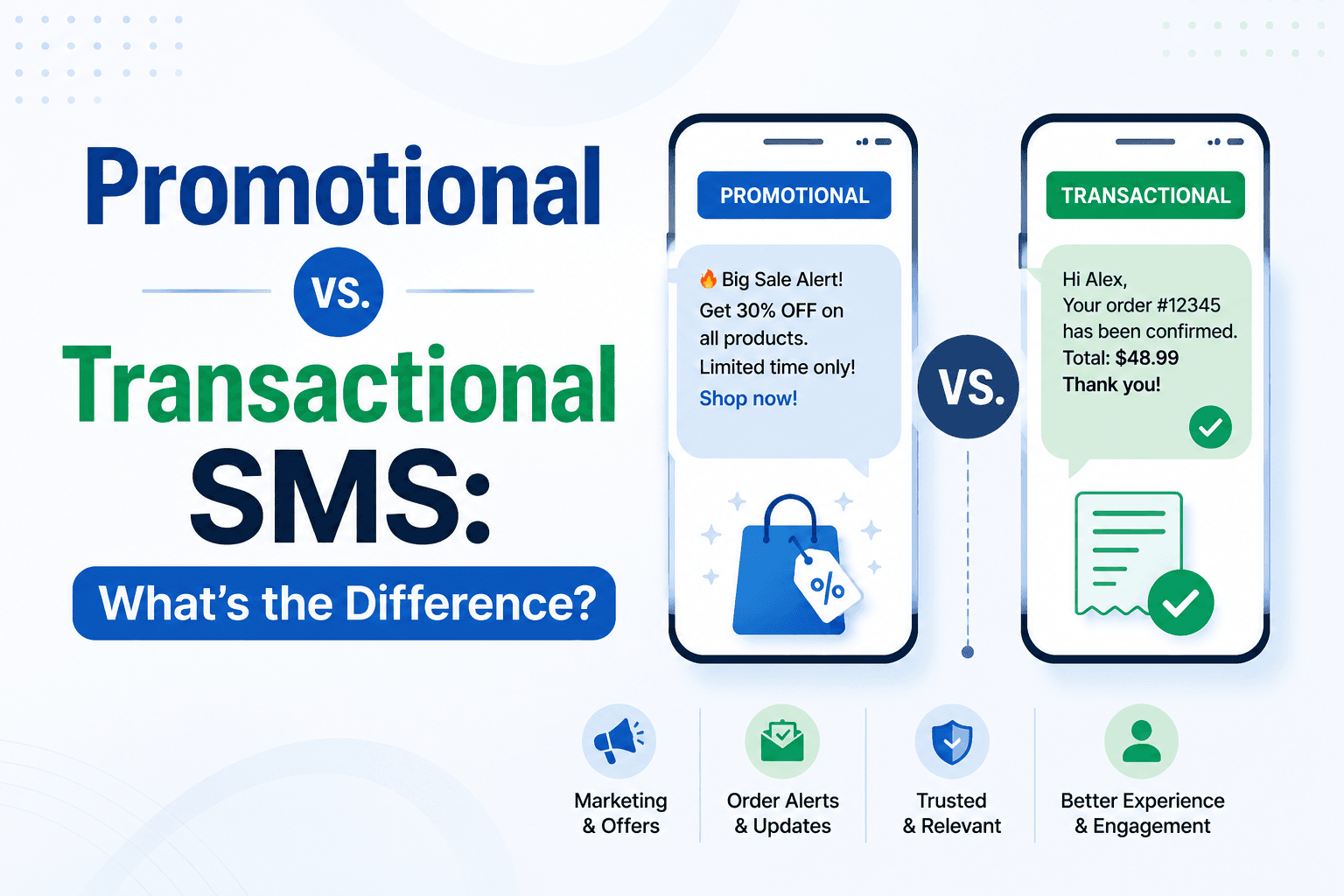
If you run a business that sends text messages to customers, you've probably come across the terms "promotional SMS" and "transactional SMS." At first glance, they might seem like just two flavors of the same thing — after all, both are texts sent from a business to a customer. But under the hood, they serve completely different purposes, follow different rules, and even travel through different regulatory channels in many countries.
Understanding this distinction isn't just a technical formality. It affects your delivery rates, your compliance obligations, your customer relationships, and ultimately whether your messages even reach your audience. Let's break down exactly what separates these two categories of SMS, and why the difference matters more than most businesses realize.
What Is Promotional SMS?
Promotional SMS, as the name suggests, is marketing content. These are messages designed to drive engagement, sales, or brand awareness. Think of them as the text-message equivalent of an email newsletter or a Facebook ad.
Common examples include:
"Flash Sale! Get 30% off all shoes this weekend only. Shop now: [link]"
"New arrivals just dropped! Check out our latest collection."
"It's your birthday month — enjoy a special discount just for you."
Festival greetings that double as sales pitches
Referral program invitations
Promotional messages are opt-in by nature. Regulations in most countries (and platform policies from carriers) require that customers explicitly consent to receive marketing texts, usually through a checkbox at sign-up, a keyword-based opt-in (like texting "JOIN" to a shortcode), or a similar affirmative action. Businesses cannot simply text promotional content to any phone number they happen to have.
Because these messages are commercial in nature, they're also subject to time restrictions in many jurisdictions. For instance, in India, promotional SMS can typically only be sent between 9 AM and 9 PM, and only through registered promotional sender IDs. Similarly, many countries require an easy opt-out mechanism (like replying "STOP") in every promotional message.
What Is Transactional SMS?
Transactional SMS, on the other hand, is informational and functional. It's not trying to sell anything — it's delivering information the customer needs, often because they've already taken an action that triggered it.
Common examples include:
One-time passwords (OTPs) for login or verification
Order confirmations ("Your order #12345 has been shipped")
Delivery updates ("Your package will arrive today between 2-4 PM")
Appointment reminders
Payment confirmations or billing alerts
Account security notifications ("A new device just logged into your account")
Transactional messages are considered essential to the service the customer has already signed up for or is actively using. Because of this, they don't require the same explicit marketing opt-in that promotional messages do — if you've made a purchase, the business is expected to notify you about its status. This is also why transactional SMS routes are generally allowed to be sent 24/7, without the time-of-day restrictions applied to promotional content.
Key Differences at a Glance
Purpose: Promotional SMS exists to market products, services, or offers. Transactional SMS exists to relay necessary information tied to a transaction or account activity.
Consent requirements: Promotional SMS requires explicit opt-in consent. Transactional SMS is generally implied by the customer's use of the service (e.g., placing an order requires shipping updates).
Timing restrictions: Promotional SMS is often restricted to specific hours (commonly 9 AM–9 PM). Transactional SMS can typically be sent at any hour, since urgent information like OTPs or delivery alerts can't wait for a "permitted" time window.
Sender ID and routing: In many countries, businesses must register separate sender IDs or use different gateway routes for promotional versus transactional content. Mixing the two — for example, sending a marketing message through a transactional route — is a violation that can get a business's messaging privileges suspended.
Opt-out mechanisms: Promotional messages must include an easy way to unsubscribe. Transactional messages generally don't need this, since they relate to an ongoing service the customer is actively using.
Delivery priority: Transactional messages often get prioritized by telecom carriers because of their time-sensitive, non-marketing nature. This is part of why OTPs and order alerts tend to arrive almost instantly, while promotional blasts can sometimes be delayed or throttled.
Why the Distinction Matters for Businesses
Getting this classification wrong isn't just a labeling issue — it can have real consequences. Sending promotional content through a transactional route (to bypass consent requirements or time restrictions) is a common but risky shortcut. Telecom regulators and carriers actively monitor for this kind of misuse, and violations can result in your sender ID being blacklisted, messages being blocked entirely, or in some regions, financial penalties.
There's also a customer trust dimension. If someone receives a marketing text disguised as an "important update," it erodes confidence in your brand and increases the likelihood they'll opt out entirely — or worse, report the message as spam. On the flip side, treating a genuinely transactional message (like an OTP) as promotional and delaying it to fit a time window would frustrate customers who need that information immediately.
For businesses building out their SMS strategy, the practical takeaway is simple: keep your transactional and promotional messaging streams completely separate. Use different sender IDs, different templates, and ideally different routes or providers if your platform supports it. Many SMS gateway providers offer distinct APIs or channels specifically for this purpose, making it easier to stay compliant without extra manual oversight.
Conclusion
Promotional and transactional SMS may both land in the same inbox on a customer's phone, but they represent two very different categories of communication — one designed to persuade, the other designed to inform. Promotional SMS drives marketing goals and requires explicit consent, time-bound sending, and opt-out options. Transactional SMS delivers essential, often time-sensitive information tied to a customer's own actions, and operates under a more permissive set of rules because of its non-marketing nature.
For any business sending SMS at scale, understanding and respecting this distinction isn't optional — it's foundational to staying compliant with telecom regulations, maintaining good sender reputation, and preserving customer trust. When in doubt, ask yourself a simple question before hitting send: is this message trying to sell something, or is it simply telling the customer something they need to know? The answer will almost always tell you which category — and which rules — apply.