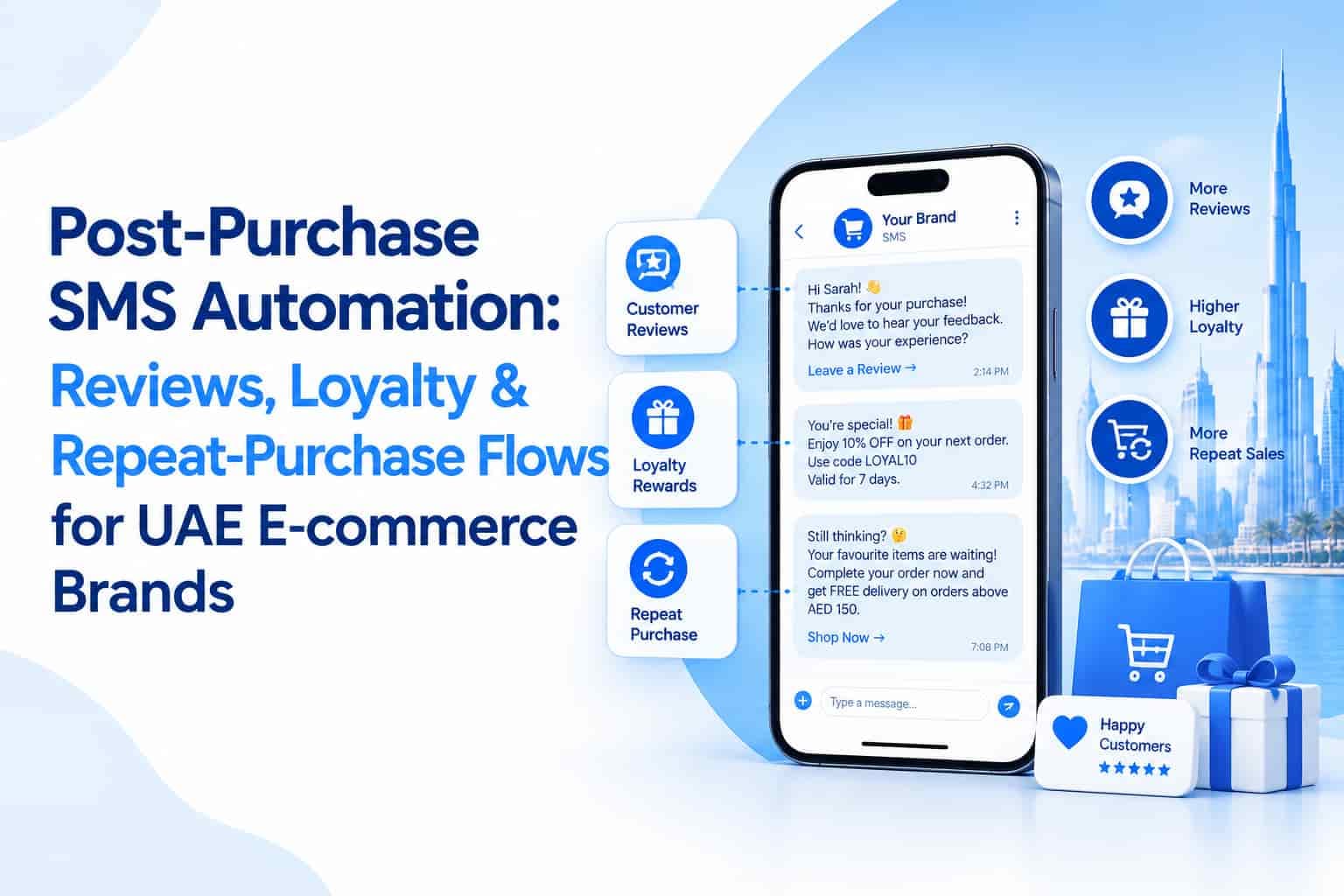
Most e-commerce SMS strategy focuses on getting the first sale — cart recovery, promotions, flash sales. Less attention goes to what happens after delivery, even though the post-purchase window is often the highest-trust moment a brand has with a customer. A well-designed post-purchase SMS flow turns a single transaction into reviews, repeat purchases, and long-term loyalty, without needing a new acquisition campaign each time.
Why Post-Purchase SMS Converts Well
A customer who just received a delivered product is, by definition, engaged with your brand at that exact moment — they're far more receptive to a review request or a relevant follow-up than a cold or lapsed customer would be. SMS's near-immediate read rate makes it well suited to catching that window before attention moves elsewhere.
The Post-Purchase Sequence
1. Review Request (Day 3-7 After Delivery)
Timed to give the customer a chance to actually use the product, but not so late that the purchase has faded from memory. Keep the ask simple — a direct link or a one-tap star rating performs better than a request that sends the customer to fill out a long form.
2. Replenishment Prompt (Consumables Only, Timed to Usage Cycle)
For products with a predictable usage cycle (skincare, supplements, household consumables), a reorder reminder timed to when the product is likely running low captures repeat purchases with minimal customer effort.
3. Cross-Sell Based on Purchase Category
A relevant complementary product recommendation — not a generic "check out our new arrivals" blast — tends to perform meaningfully better because it's tied to something the customer has already shown real interest in.
4. Loyalty Milestone Messages
Marking a customer's Nth order, a spending milestone, or membership anniversary with a small, genuine acknowledgment (points balance, tier upgrade, a small thank-you offer) builds emotional loyalty that pure discount-chasing doesn't.
Compliance: Where Post-Purchase Messaging Sits
Review requests and pure loyalty acknowledgments without a promotional offer can often be framed as service-related communication, but the moment a message includes a discount, incentive, or product promotion, it should be treated as promotional under TDRA rules — meaning a registered AD- sender ID, documented consent, and the 7 AM-9 PM sending window all apply. The safest approach for most brands is to secure marketing consent at checkout (separate from the transactional-notification opt-in) so the entire post-purchase sequence, including any promotional elements, is properly covered.
Making Reviews Easy to Leave
Send the review link directly to the product page or a one-tap star-rating widget — every extra step reduces completion rate.
Ask one clear question first ("How would you rate your order?") before requesting a written review, capturing at least a rating even from customers who won't write text.
Time it after delivery confirmation, not before — asking for a review on an item that hasn't arrived yet damages trust rather than building it.
Building Loyalty Without Over-Discounting
It's tempting to make every post-purchase touchpoint a discount offer, but consistently discount-led messaging trains customers to wait for the next offer rather than buy at full price. Mixing in genuinely non-discount value — early access, exclusive content, milestone recognition — keeps the relationship from becoming purely transactional.
Sample Post-Purchase SMS Templates
Review request: Hi [Name], how was your recent order from [Brand]? Rate it in one tap: [link]
Replenishment (transactional/service framing): Hi [Name], your [Product] might be running low based on your last order. Reorder here: [link]
Loyalty milestone (promotional, AD- sender): AD-[BRAND]: Congrats [Name], that's your 5th order with us! 🎉 Enjoy 15% off your next purchase: [link]. Reply STOP to opt out.
Cross-sell: Loved your [Product]? Customers who bought it also love [Related Product]: [link]
Frequently Asked Questions
How soon after delivery should I ask for a review?
3-7 days is a common window — enough time to actually use the product, but before the purchase experience fades from memory.
Should loyalty messages always include a discount?
No — mixing recognition-only messages (milestone acknowledgment, early access) with occasional discount offers builds stronger long-term loyalty than discount-only communication.
Do replenishment reminders need promotional sender ID registration?
If framed purely as a service reminder with no discount or marketing language, they can often be treated as transactional. Adding any incentive or promotional framing moves it into promotional compliance requirements.
What's a good response rate to expect from review request SMS?
This varies significantly by industry, product type, and how frictionless the review link is — brands that use one-tap rating widgets generally see meaningfully higher completion than those linking to a full review form.
Conclusion
The post-purchase window is one of the most underused opportunities in UAE e-commerce SMS strategy. A structured sequence — review request, timely replenishment, relevant cross-sell, and genuine loyalty recognition — turns a single sale into a longer relationship, provided the promotional elements stay properly registered and consented under TDRA rules. Brands that invest as much thought into what happens after delivery as they do into the initial sale consistently see stronger repeat-purchase rates.