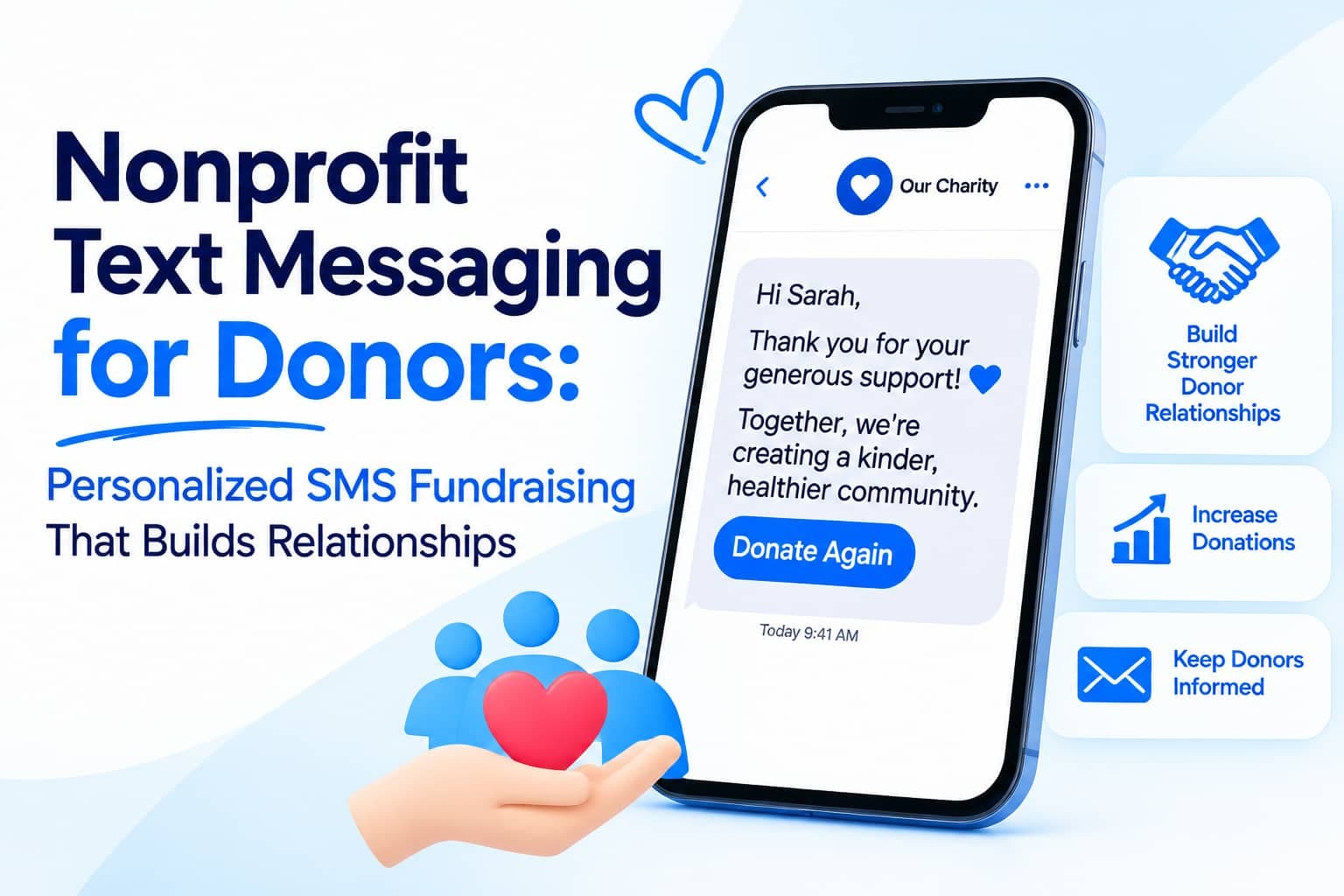
From Collection Box to Conversation
Many nonprofits use text messaging mainly to send urgent appeals and collect quick gifts. That has value, but organizations that keep donors for years tend to use it differently. They treat each message as part of a relationship: thanking people specifically, showing what their gift achieved, and asking in a way that reflects what the donor has done before. This article focuses on how to do that through personalization and segmentation, using practical examples a small team can apply without special technology.
Why Personalization Matters for Donors
People give because they connect with a cause, a story, or an outcome. A generic appeal ignores that connection and reads like any other solicitation. A message that acknowledges what the donor supported, thanks them for it, and shows a result feels like a relationship. That difference affects not only whether someone gives again but whether they stay on your list at all. Personalization here means little more than using the name, referencing the campaign they supported, and adjusting the ask to their history.
A Practical Segmentation Model
A small nonprofit can start with five groups based on data it already has. First-time donors gave once in the last few months and need a warm thank-you and an introduction to your work, not an immediate second ask. Repeat donors have given two or more times and can be invited into monthly giving. Major donors give at the top of your range and deserve personal contact, perhaps a call rather than a text. Lapsed donors gave before but not in the last year or more and respond to a message that acknowledges their past support. Engaged non-donors, such as volunteers and event attendees, may care deeply but have never given, and need an invitation that fits their involvement.
Sample Messages for Each Group
For a first-time donor: "Thank you, Meera. Your gift this week will help provide school supplies for 5 children. We will share the results next month. Reply STOP to opt out." For a repeat donor: "Meera, thanks for supporting our school programme again. Would you consider a monthly gift of any size? Details: [link]." For a lapsed donor: "Hi Meera, it has been a while since your gift to our school programme. Since then, 240 children have received supplies. See what is new: [link]." For a volunteer who has not donated: "Thank you for volunteering at Saturday's drive, Meera. If you would like to support the programme further, here is how: [link]." Figures in samples are placeholders, and any real message should use verified numbers from your own reports.
Balancing Asks With Thanks and Impact
A healthy program does not ask every time. A common guideline is to alternate asks with updates, so supporters regularly hear about results and gratitude, not only requests. Impact messages are particularly powerful because they answer the question every donor quietly asks: did my gift make a difference? A short, concrete update about a milestone or an outcome keeps supporters connected and makes the next appeal feel earned. Thank-you messages sent promptly after a gift reinforce goodwill at its peak.
Timing and Frequency
Match timing to the story. Emergency appeals are naturally urgent, while recurring program updates can follow a steady, predictable rhythm. Avoid sending multiple asks in quick succession, particularly to someone who has just given. Different segments can tolerate different frequencies, and your opt-out data will show you when you have pushed too far.
Consent, Transparency, and Trust
Because donors give out of trust, respect their preferences carefully. Collect clear consent, state what they will receive and roughly how often, make opt-out simple, and honor requests immediately. Identify your organization clearly in every message so recipients know who is writing. Never use manipulative urgency or exaggerated claims, and make sure every figure you quote is accurate and current.
What to Measure
Look beyond immediate donations. Track repeat giving rates, average gift size by segment, opt-out rates, and the retention of donors acquired or re-engaged by text over twelve months. A message that does not produce an instant gift but strengthens the connection still has value, which a single-campaign revenue figure will not capture. Test one variable at a time, such as the ask amount or the wording of a thank-you, and keep a record of what you learn.
Common Mistakes
Common errors include sending the same appeal to everyone, asking immediately after a gift, neglecting thank-yous, quoting unverified impact figures, using text for sensitive conversations that need a call, and measuring only the revenue of each single appeal.
Frequently Asked Questions
Is text fundraising appropriate for major donors?
Texts can support the relationship with scheduling or thanks, but significant gifts usually warrant personal conversation.
How do I collect consent?
Use clear opt-in language on forms, event sign-ups, and donation pages, and record when and how each supporter agreed.
How often is too often?
There is no universal number, so watch opt-out rates by segment and adjust accordingly.
Conclusion
Text messaging helps nonprofits most when it feels like a conversation with someone who knows the donor. Segment supporters by giving history and involvement, write messages that reflect each relationship, balance asks with thanks and verified impact updates, respect consent and frequency, and measure retention alongside revenue. Start with the five-group model, send one improved message to each group, and build from the results.