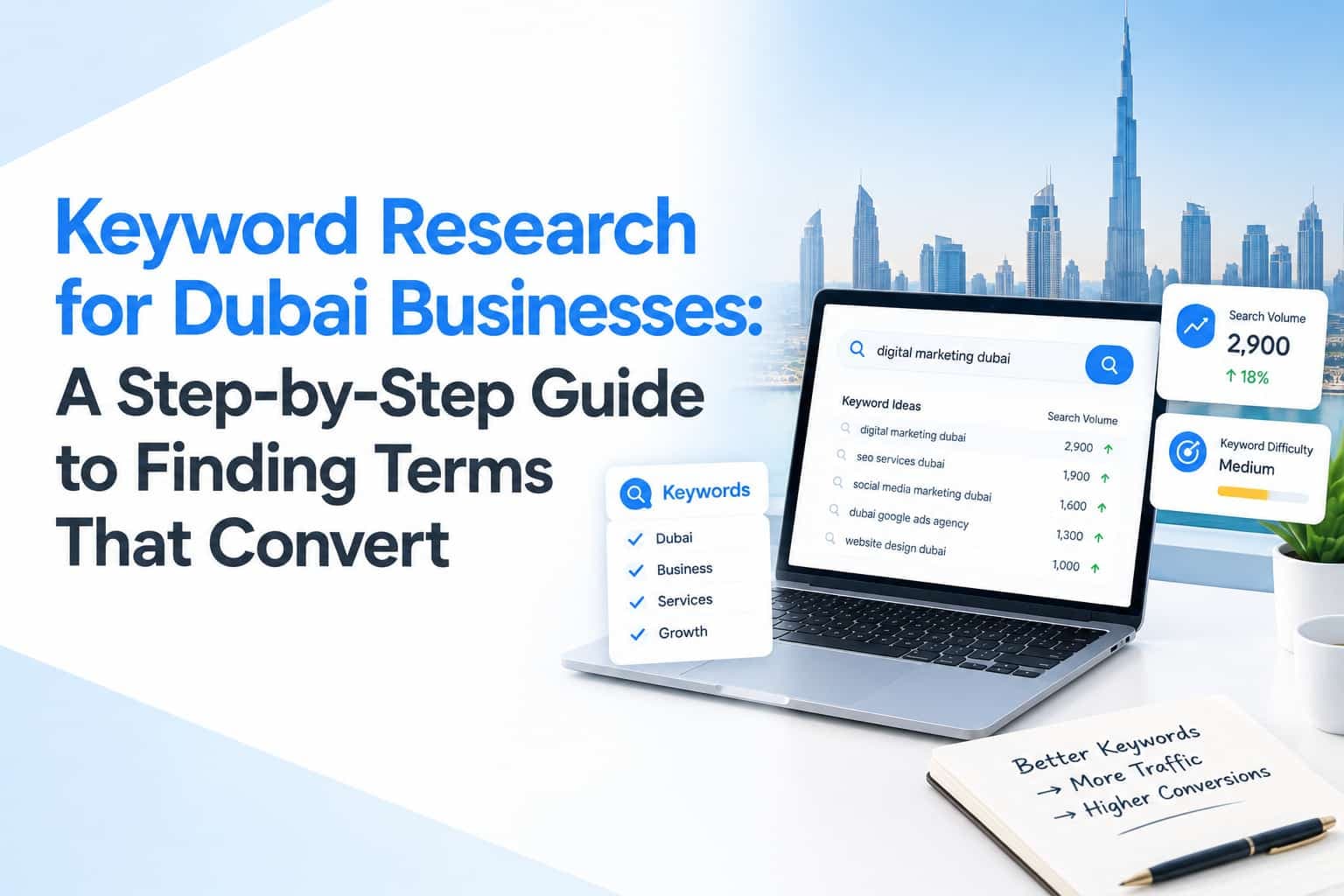
Keyword research decides whether your content meets real demand or sits unread on your website. In Dubai, where audiences search in several languages and competition for commercial terms can be intense, a structured approach saves time and budget and keeps your marketing aimed at people who might actually become customers. This guide explains a repeatable process, from defining goals to organizing keywords into clusters that build lasting authority.
Define Business Goals First
Before opening any tool, list your products and services, your target customers and the pages that should generate leads or sales. Keywords should support those goals rather than simply attract traffic. A term that brings thousands of curious visitors but never a single enquiry has little commercial value, while a modest phrase used by people ready to buy can transform your pipeline. Starting with business goals keeps the entire process grounded.
Build a Seed List
Seed keywords are the starting points you will expand later. Begin with the core services and products you offer, described in the words your customers use rather than internal jargon. Add the problems you solve, such as questions beginning with how, best, cost or near me, because these often reveal buying intent. Include location modifiers relevant to your market, from Dubai and Abu Dhabi to specific districts like Business Bay or Jumeirah Lake Towers. Finally, note the terms used by competitors and by your broader category.
Expand With the Right Tools
Google Keyword Planner provides volume estimates and related ideas, and Google Search Console shows the queries your site already appears for, which are often the fastest opportunities. Autocomplete suggestions, the People Also Ask boxes and related searches at the bottom of results pages reveal how real people phrase their questions. Third-party tools such as Semrush or Ahrefs add difficulty scores and competitor insights. Treat volume figures as directional estimates rather than exact numbers, since they vary between tools and change over time.
Classify Keywords by Search Intent
Search intent describes what the person wants when they type a query. Informational searches, such as asking what bulk SMS is, suit guides and explainers. Commercial investigation searches, such as looking for the best SMS provider in the UAE, suit comparisons and reviews. Transactional searches, such as wanting to buy bulk SMS in Dubai, suit service and pricing pages. Navigational searches are people looking for a specific brand.
The most reliable way to confirm intent is to search the term yourself and study what ranks. If the first page is full of product pages, a blog post is unlikely to compete, however well written. If it shows guides and articles, a service page may struggle. Matching your content format to what Google already rewards saves months of wasted effort.
Prioritize Realistically
Not every keyword is worth pursuing now. Score candidates on relevance to your business, strength of intent, search volume and ranking difficulty. New or smaller websites usually win first with long-tail keywords, which are longer and more specific phrases such as sender ID registration for SMS in the UAE. These attract fewer searches but face less competition, and the people searching them often know exactly what they need. As your authority grows, you can compete for broader, more competitive terms.
Group Keywords Into Topic Clusters
Instead of creating one page for each keyword, group related terms into clusters around a central subject. A cluster usually has a main page covering the broad topic comprehensively and supporting articles that explore specific subtopics in more depth, all linked together. This structure helps readers move naturally through related information, and it shows search engines that your site covers the subject thoroughly. It also prevents you from writing several thin articles that compete against each other.
Account for Language and Local Habits
Research Arabic and English separately, because demand and phrasing differ between them. Some searchers type Arabic words using Latin characters, others mix languages within a single query, and many use different terms depending on whether they search on mobile voice or keyboard. Pay attention to local seasonality too. Searches for gifts, travel, education and charitable giving, for example, rise sharply around events like Ramadan, Eid and the Dubai Shopping Festival.
Map Keywords to Pages
A keyword map is a simple spreadsheet listing each target keyword, its intent, the page assigned to it, its current ranking and the next action. Its main purpose is to prevent cannibalization, which happens when several pages on your site compete for the same primary keyword and confuse search engines about which one to rank. Each primary keyword should belong to one page, with related secondary terms supporting it naturally within the content.
Review and Refresh Regularly
Keyword research is never finished. Review Search Console every month to see which queries are growing and which pages are stuck on the second page of results. Pages ranking between positions eight and twenty are often the quickest wins, because improving the content, adding internal links or updating information can lift them onto the first page. Retire targets that bring visitors but no business value, and add new ones as your services and your market evolve.
Conclusion
Effective keyword research is a process, not a one-time task. Understand your goals, gather ideas from tools and real customers, classify intent, prioritize by realistic opportunity and organize everything into clusters. Do this well, and every article, service page and campaign you create will rest on evidence rather than guesswork. For Dubai businesses facing crowded markets and multilingual audiences, that discipline is often the difference between content that gets noticed and content that gets lost.