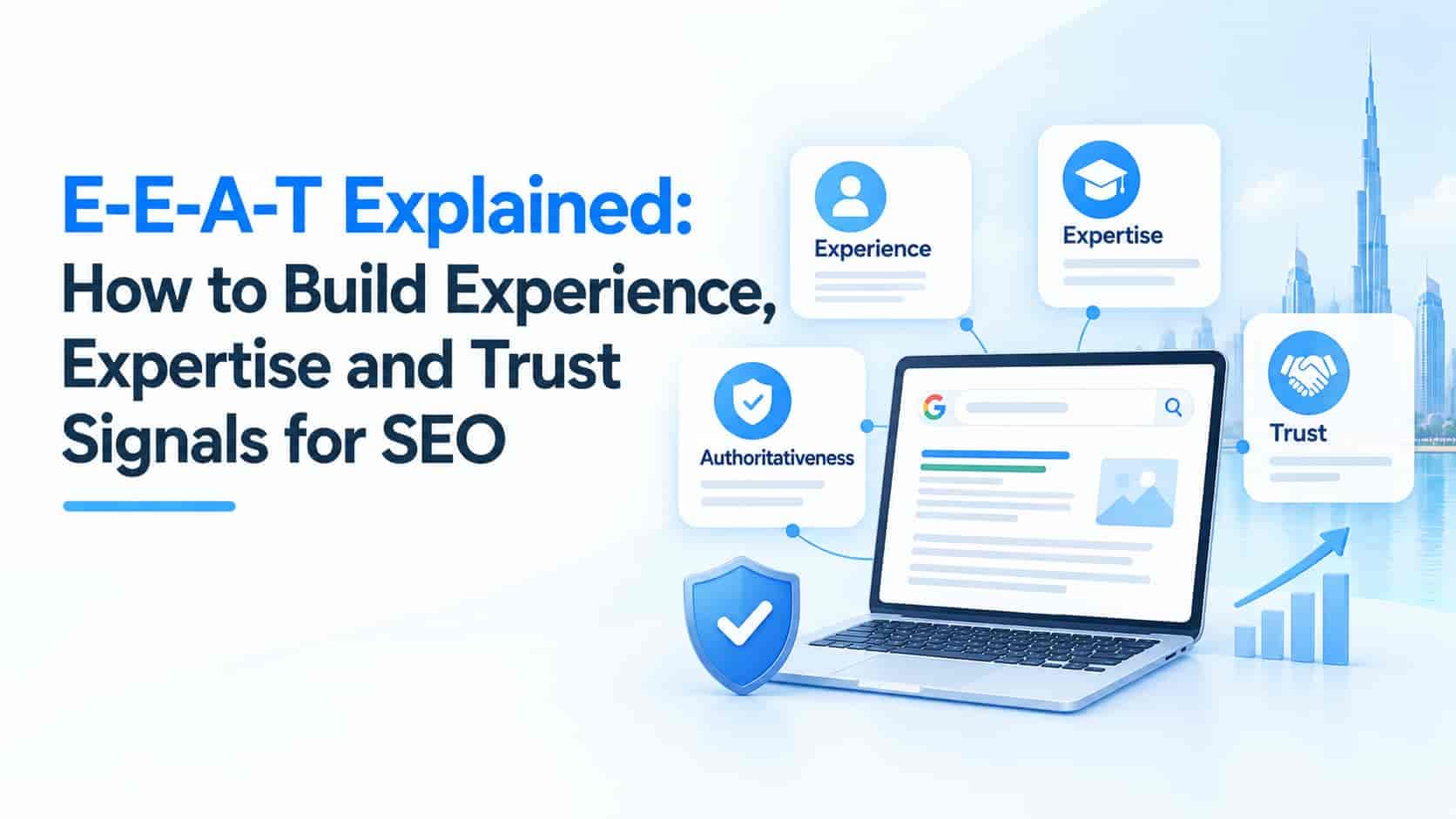
Google's quality guidelines use the concept of E-E-A-T, which stands for Experience, Expertise, Authoritativeness and Trustworthiness. It is not a single ranking factor that you can switch on, but a framework that human quality raters use to judge content, and one that reflects what Google's systems try to reward. For businesses in Dubai, especially in finance, health, legal services and property, demonstrating E-E-A-T is increasingly important for earning visibility and customer confidence.
The Four Components Explained
Experience asks whether the author has first-hand knowledge of the topic. A guide to relocating to Dubai written by someone who has actually done it, with practical details and original photos, carries more weight than a generic summary assembled from other sources. Expertise asks whether the author has relevant knowledge or credentials, such as professional qualifications, years in the field or a specialist background.
Authoritativeness concerns recognition. It reflects whether you are known as a go-to source, which is shown by mentions, citations and links from respected websites, industry awards and speaking roles. Trustworthiness is the most important element of all. It covers accuracy, transparency, secure technology and honest business information, and without it the other three lose their value.
Why It Matters More for Sensitive Topics
Content that can affect a person's health, finances, legal standing or safety is held to higher standards, because poor information can cause real harm. If your Dubai business operates in these areas, weak sourcing, unclear authorship or exaggerated claims present a bigger risk. Even in less sensitive sectors, though, customers are increasingly cautious and quick to judge whether a website looks credible.
Show Who Is Behind the Content
Anonymous content is difficult to trust. Add author names and short biographies that explain why each writer is qualified to discuss the topic. Create a detailed About page covering your team, your history, your licences and your values, and include real contact details, including a physical address and trade licence information where applicable. These simple elements answer the basic question every visitor silently asks: who are these people, and can I rely on them?
Demonstrate Real Experience
Experience is difficult to fake and easy to recognize. Use original photographs, case studies, customer stories and practical lessons learned from real projects. Share what went wrong as well as what went well, since honest accounts feel more credible than polished claims. For a service business, describing how you handled a specific client challenge says far more than a generic list of capabilities.
Cite Reliable Sources
Where your content makes factual claims, support them. Reference official regulators, government sources and recognized research, and link to primary sources when doing so helps readers verify the information. Date your articles and update them when facts change, because outdated guidance undermines trust. In a fast-changing environment like the UAE, where regulations and procedures are regularly updated, a visible commitment to accuracy is a real competitive advantage.
Build Reputation Off Your Own Website
Search engines and customers look beyond your own pages to judge credibility. Encourage genuine reviews on Google and relevant industry platforms and respond to them professionally, including those that are critical. Seek mentions from reputable industry publications and partners, and maintain consistent business information across directories and social profiles. A strong reputation across the web reinforces what your own site claims.
Technical and Policy Trust Signals
Basic technical hygiene supports trust. Serve your entire site over HTTPS, provide clear privacy, refund and terms pages, and avoid intrusive pop-ups and misleading design. If you collect payments or personal data, make your security practices clear. Customers who feel safe are more likely to enquire, buy and recommend you to others.
What to Avoid
Several common practices damage credibility. Fake author profiles or invented credentials can be discovered and are deeply harmful when they are. Exaggerated claims without evidence, thin content produced only to attract search traffic and fabricated reviews all erode trust, and the last may also breach platform rules and consumer protection laws. It is far better to be honest about what you do well and to let real evidence speak for you.
Conclusion
E-E-A-T is ultimately about being a credible source that people and search engines can rely on. Make authorship transparent, back claims with evidence, demonstrate real experience and build a reputation that others can verify. Do these things consistently and your Dubai website will be better positioned to earn rankings and, more importantly, the trust that turns visitors into customers. Credibility is built slowly, but once established it becomes one of the most durable assets your business owns.