Why Payment Notifications Deserve Careful Design
The seconds after a payment are the moment of greatest customer uncertainty. Did it go through? Was I charged twice? Where is my receipt? A clear SMS answers those questions immediately, and the absence of one produces support calls, duplicate payment attempts, and lost trust. Because payment notifications are transactional, customers expect them and read them, which makes them one of the highest-value messages a business sends.
The Full Set of Payment Messages
A complete flow has more than a single "payment received" text. Success confirmations state the amount, merchant, and reference. Failure alerts explain that the payment did not complete and how to retry. Due reminders go out before a bill or instalment is due. Receipt messages link to an invoice. Refund confirmations state the amount and expected timeline. Each of these meets a different emotional need, from reassurance to action, so each deserves its own template.
Sample Templates You Can Adapt
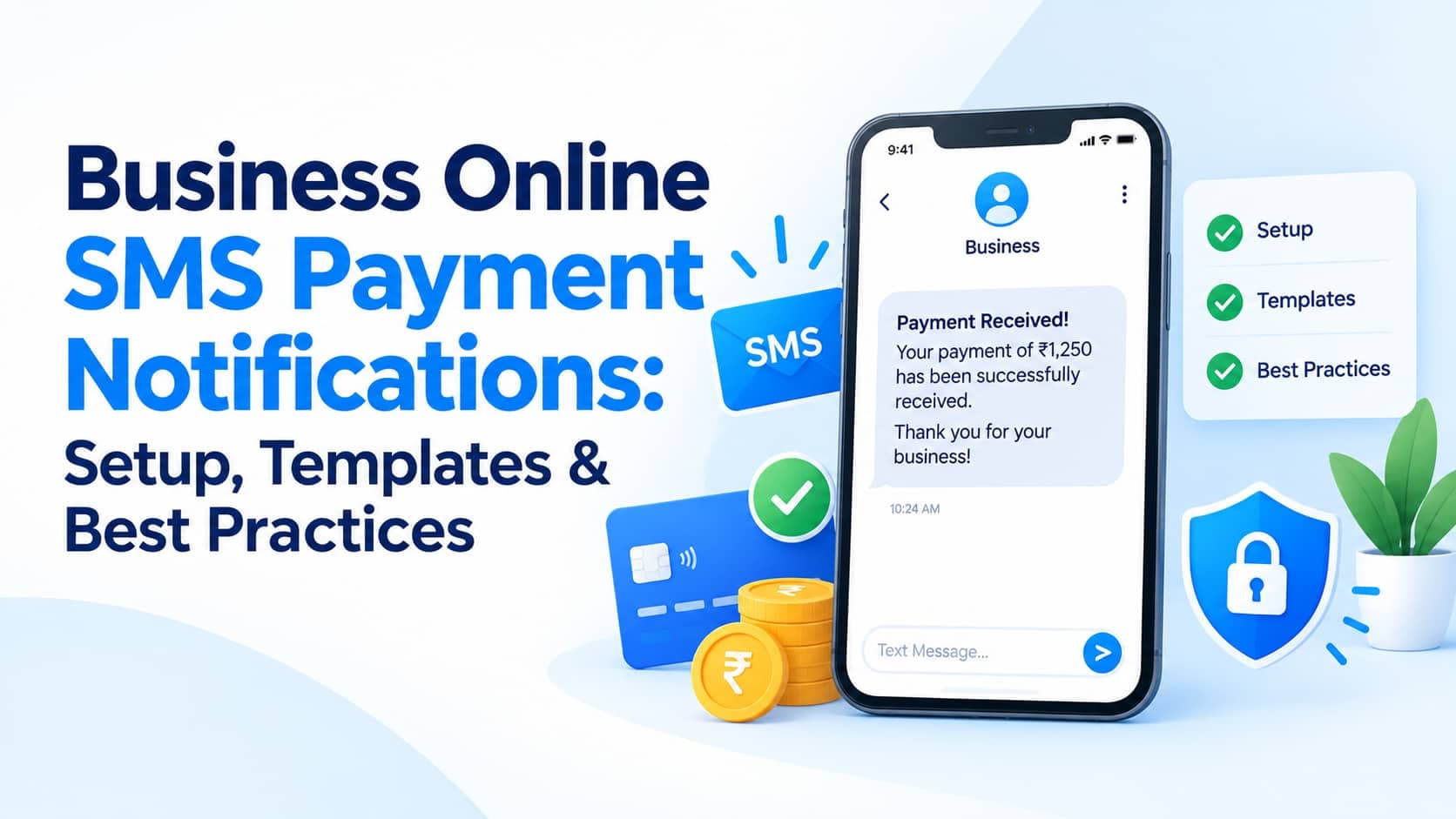
A success message might read: "Payment of AED 250.00 received by [Brand] on 12-Oct. Ref: ORD48213. Thank you." A failure message might read: "Your payment of AED 250.00 to [Brand] could not be completed. Please retry here: [link]. Ref: ORD48213." A reminder might read: "Your [Brand] invoice INV-1092 of AED 250.00 is due on 15-Oct. Pay here: [link]." A refund message might read: "Refund of AED 250.00 for order ORD48213 has been issued and may take a few business days to show in your account." Notice what these have in common: the brand name, the amount, a reference, and one clear next step, with no promotional content.
Anatomy of a Good Payment Message
Lead with the status, because that is what the reader wants first. Identify the business clearly. Include the amount and a reference the customer can quote to support. Keep to one action at most. Avoid marketing language: mixing promotion into a transactional message can confuse recipients and, in regulated markets, cause the message to be treated as promotional and blocked or delayed. Never ask the customer to reply with a password, PIN, or card number, because legitimate businesses do not request these by text.
Reliability: What Happens When a Message Fails
Because these messages are time-sensitive, build for failure. Use a provider that offers real-time delivery reports, and decide what happens if a message does not deliver within a set time. Common options are retrying once, sending the same confirmation by email, or showing it in an app. For critical flows such as one-time payment codes, a fallback channel prevents customers from being stranded.
Registration and Compliance
In many markets, including India and the UAE, transactional messages require a registered sender ID and approved templates. Variables such as amount and reference are usually inserted into fixed template fields, which means your wording must be settled before approval. Plan for this when designing the messages, and keep transactional templates separate from promotional ones.
Security: Helping Customers Trust Genuine Alerts
Payment texts are a favorite disguise for fraud, so consistency is a security feature. Use the same registered sender name every time, keep links short and clearly branded, and tell customers in your terms or help pages what you will and will not ask for by text. A customer who knows your pattern can spot an imitation immediately.
Connecting Alerts to Your Payment System
Most businesses trigger these messages automatically through an API connection between the payment gateway or billing software and the SMS provider. The payment event supplies the amount and reference, and the system sends the matching template within seconds. Test every outcome, including failures, partial payments, and refunds, before going live, because edge cases are where messages most often go wrong.
Common Mistakes
Typical errors include omitting the reference number, sending vague failure messages, adding promotions to receipts, using different sender names across messages, and testing only the success path. Another is neglecting refund messages, which customers often care about most.
Frequently Asked Questions
Can I include a payment link?
Yes, but keep it short, clearly branded, and consistent so customers recognize it as genuine.
Should I send a message for every payment?
Generally yes for successes and failures, since silence creates uncertainty. For very small recurring charges, confirm the preference with customers.
Do transactional messages need consent?
They are tied to an action the customer took, which typically places them in a different category from promotions, but confirm the rules in your market with your provider.
Conclusion
A good payment notification is short, factual, and specific: status first, brand, amount, reference, and one clear next step. Build a complete set covering success, failure, reminders, receipts, and refunds, register your templates, plan for delivery failure, and keep promotion out entirely. The result is fewer support tickets and a customer experience that feels organized and trustworthy.