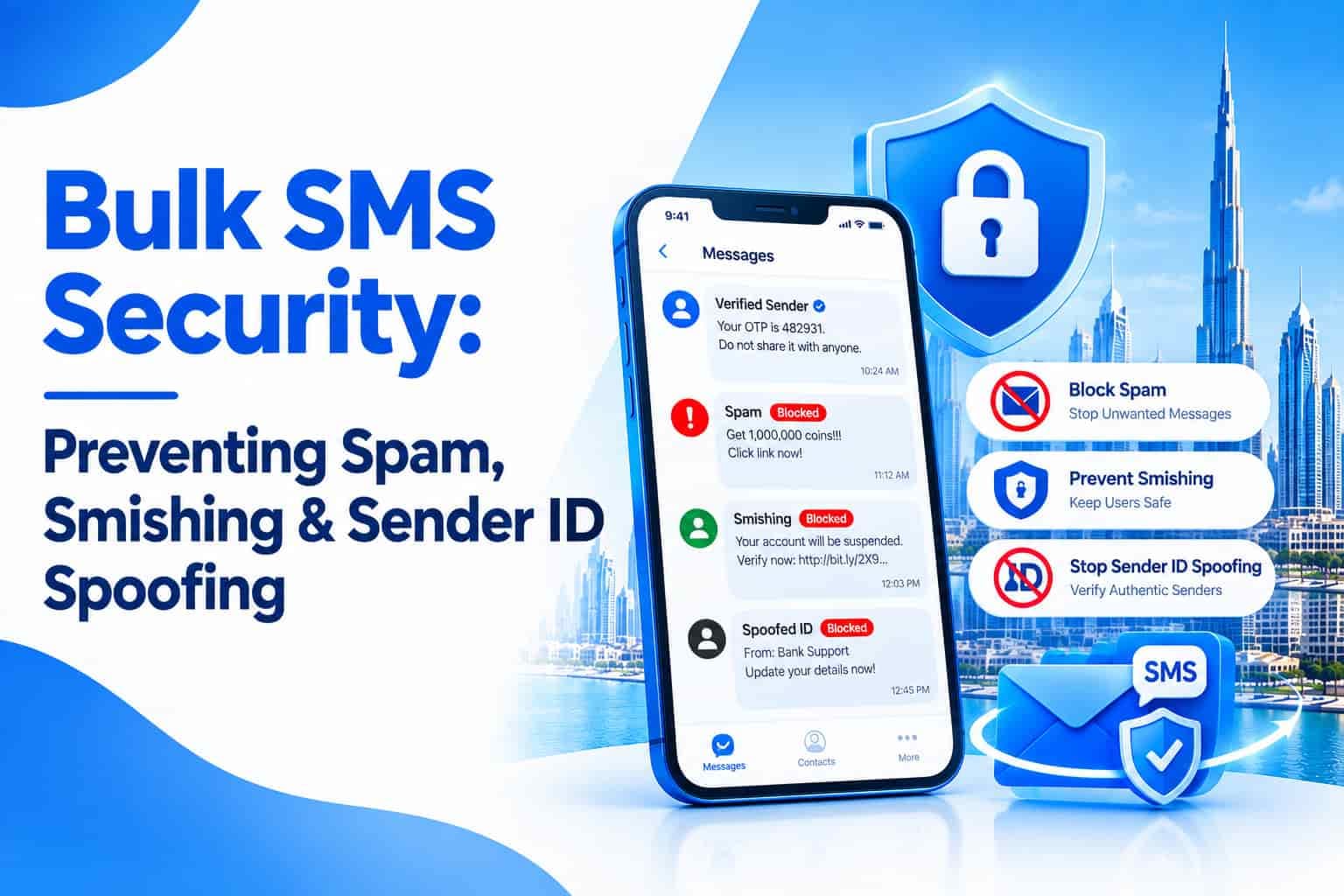
As more businesses rely on Bulk SMS for customer communication, the channel has also become a target for abuse — spam complaints, smishing (SMS phishing) attacks, and sender ID spoofing all threaten the trust that makes SMS effective in the first place. Protecting your messaging channel is no longer optional; it's a core part of running a responsible Bulk SMS program.
Understanding the Threat Landscape
Spam complaints
Sending unsolicited or excessively frequent promotional messages leads to spam complaints, which carriers track against a sender ID's reputation. Enough complaints can result in throttled or blocked delivery, even for legitimate future campaigns.
Smishing (SMS phishing)
Fraudsters impersonate legitimate businesses — banks, delivery services, government agencies — to trick recipients into clicking malicious links or sharing sensitive information. This damages trust in the entire SMS channel, including for businesses that had nothing to do with the attack.
Sender ID spoofing
Bad actors sometimes attempt to disguise their messages under a trusted brand's sender ID, hoping to exploit the reputation and familiarity that a legitimate business has already built with its customers.
How Businesses Can Protect Their Bulk SMS Channel
1. Register and verify sender IDs properly
Formal sender ID registration (through DLT or equivalent regulatory frameworks depending on the market) makes it significantly harder for bad actors to impersonate a registered business, since carriers can verify authorized senders.
2. Never ask for sensitive information via SMS
Legitimate businesses should train customers to expect that they will never be asked for passwords, full card numbers, or OTPs through inbound SMS requests — making it easier for customers to spot fraudulent messages impersonating the brand.
3. Use link shorteners with branded or recognizable domains
Generic, unbranded shortened links are more likely to be flagged as suspicious by both recipients and carrier spam filters. A branded short domain builds recognition and trust over repeated use.
4. Monitor complaint and opt-out rates closely
A sudden spike in spam complaints or opt-outs is often an early signal of either a targeting/frequency problem or, in some cases, that your sender ID may be under active spoofing attempts.
5. Respect opt-out requests immediately
Continuing to message a recipient after they've opted out is one of the fastest ways to generate spam complaints and damage sender reputation, regardless of intent.
Educating Customers to Recognize Smishing
Encourage customers to verify unexpected links by visiting the official website or app directly rather than clicking an SMS link.
Remind customers that legitimate OTPs and account alerts will never ask them to "reply with your OTP" to a message.
Provide a clear, published channel (official support number or email) where customers can report suspicious messages claiming to be from your brand.
Sample Customer Awareness Message
Reminder: We will never ask for your OTP, password, or card details via SMS or call. Report suspicious messages to [support contact].
What to Do If Your Sender ID Is Being Spoofed
Report the incident to your Bulk SMS provider and telecom regulator immediately, notify affected customers through verified channels (official app, website banner, verified social media), and work with your provider to strengthen sender ID authentication where technically possible.
FAQs
Can sender ID spoofing be completely prevented?
Registered and verified sender ID frameworks make spoofing significantly harder, though no system offers complete elimination, which is why customer education remains an important complementary defense.
How do spam complaints affect future Bulk SMS delivery?
Carriers track spam complaint rates against sender IDs, and consistently high complaint rates can lead to throttling or outright blocking of future messages from that sender, even for unrelated campaigns.
Should businesses include a "report as spam" instruction in messages?
It's more effective to include a clear opt-out instruction (like "Reply STOP") and honor it immediately, since giving recipients an easy way out reduces the likelihood they'll report the message as spam instead.
Conclusion
A secure Bulk SMS channel is a shared responsibility between the sending business, the messaging platform, and informed customers. By registering sender IDs properly, respecting opt-outs, using recognizable branded links, and actively educating customers about smishing red flags, businesses protect not just their own reputation but the overall trust that makes SMS such an effective communication channel in the first place.