Why Generic Bulk SMS Campaigns Are Losing Ground
A single broadcast message sent to an entire contact list once performed well simply because SMS was a novel channel. In 2026, customers expect more. Personalized bulk SMS campaigns consistently outperform generic blasts because they speak to a specific need at a specific moment, rather than shouting the same offer at everyone on the list.
Research across the industry shows that personalized content significantly increases the likelihood of a purchase. That means the businesses winning with bulk SMS marketing today are the ones investing in audience segmentation before they invest in bigger contact lists. Sending more messages to the wrong people rarely beats sending fewer, better-targeted ones.
How to Segment Your SMS Audience Effectively
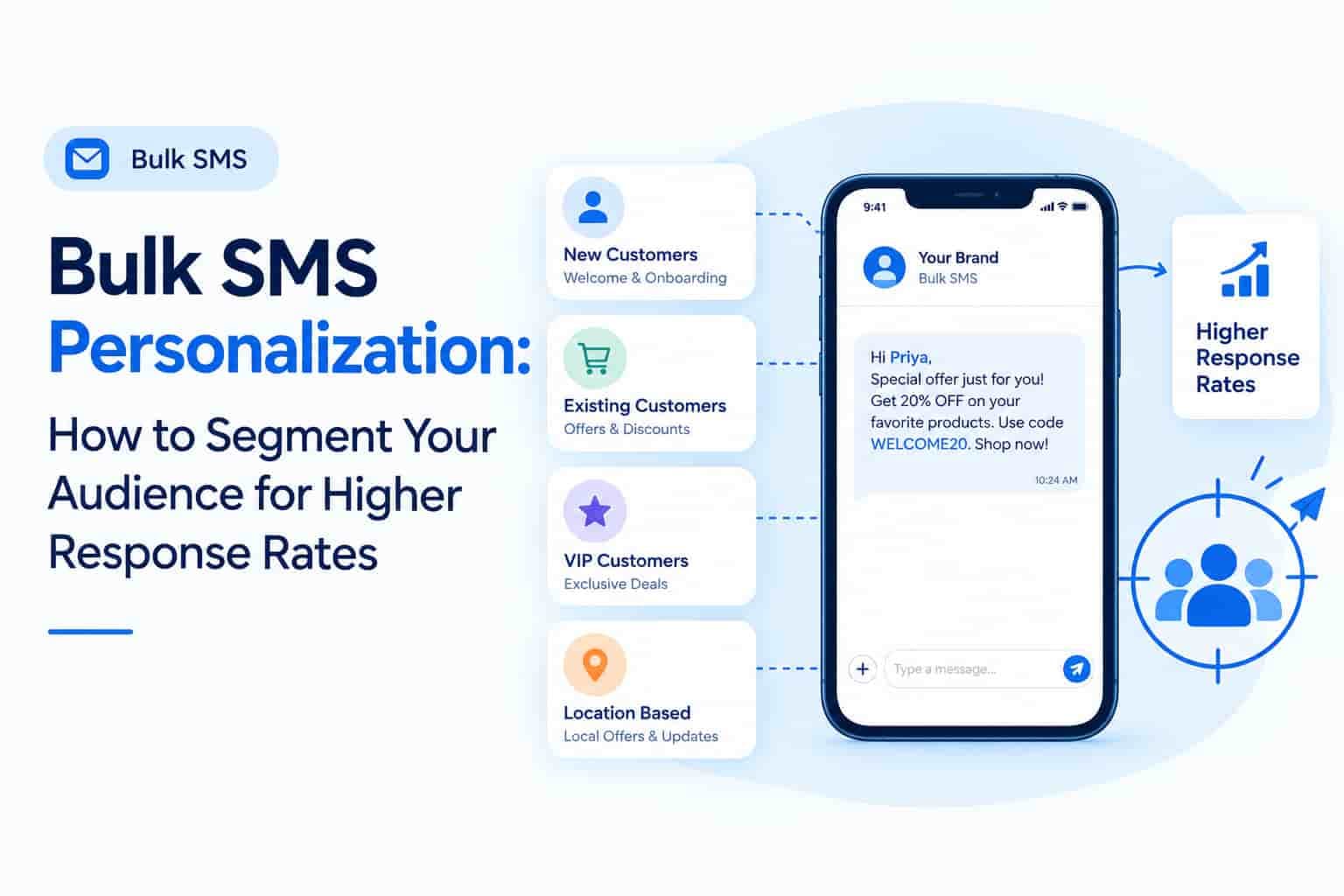
Segmentation starts with the data you already have. Purchase history, location, engagement level, and stated preferences all give you natural dividing lines. Common segments include:
- New subscribers who need a welcome sequence, not a hard sell
- Repeat customers who respond well to loyalty-style offers
- Inactive contacts who need a win-back campaign, not routine promotions
- Location-based groups for region-specific sales or store openings
- High-value spenders who may warrant early or exclusive access to offers
Each segment should receive messaging tailored to where they are in the customer journey. A first-time buyer and a five-time repeat customer should never receive an identical text, because their relationship with your brand — and what will move them to act — is fundamentally different.
Building Personalization Into Every Message
Personalization goes beyond inserting a first name. It includes referencing past purchases, sending offers tied to browsing behavior, and adjusting send times to match a contact's known activity pattern. A customer who consistently buys on weekends shouldn't receive your best offer on a Tuesday morning when they're least likely to check it.
Combined with smart contact filtering to remove invalid, landline, or unsubscribed numbers, this keeps your sender reputation strong and your delivery rates high. Carriers increasingly monitor complaint rates and bounce rates when deciding whether to flag a sender, so a clean, well-segmented list is also a technical safeguard, not just a marketing best practice.
Automation platforms make this manageable at scale. Instead of manually building lists every time you launch a campaign, you can set rules that automatically route contacts into the right segment as their behavior changes — a customer who makes a third purchase automatically graduates from "new subscriber" into "repeat customer," triggering a different message track without any manual work on your end.
Measuring Whether Personalization Is Actually Working
It's easy to assume personalization is helping, but the only way to know for certain is to compare segmented campaigns against a control group receiving a generic message. Track click-through rate, conversion rate, and opt-out rate side by side. In most cases, segmented campaigns show meaningfully higher engagement and noticeably lower opt-out rates, since relevant messages are far less likely to feel like spam.
Over several campaigns, this data also tells you which segments are most responsive, helping you prioritize where to invest further personalization effort — whether that's building more granular segments or layering in additional data points like product category preference.
Conclusion
Segmentation and personalization are no longer optional extras for bulk SMS marketing — they are the difference between a campaign that gets ignored and one that drives real conversions. By grouping your audience thoughtfully and tailoring each message to their stage in the customer journey, you improve open rates, click-through rates, and ultimately revenue per message sent. Start small: segment your list into three or four meaningful groups, personalize the next campaign for each, and measure the difference in response. Over time, this disciplined approach compounds into a noticeably stronger-performing SMS program than any one-size-fits-all blast could ever achieve.