Why Consent Is the Foundation of a Healthy SMS List
A large contact list built without proper consent is a liability, not an asset. Poor opt-in practices lead to high complaint rates, carrier filtering, and eventual sender ID suspension — problems that no amount of clever copywriting can fix. Bulk SMS opt-in best practices aren't just a legal requirement in India; they're what separates a sustainable messaging program from one that burns out its own list within a few months.
What a Proper Opt-In Actually Looks Like
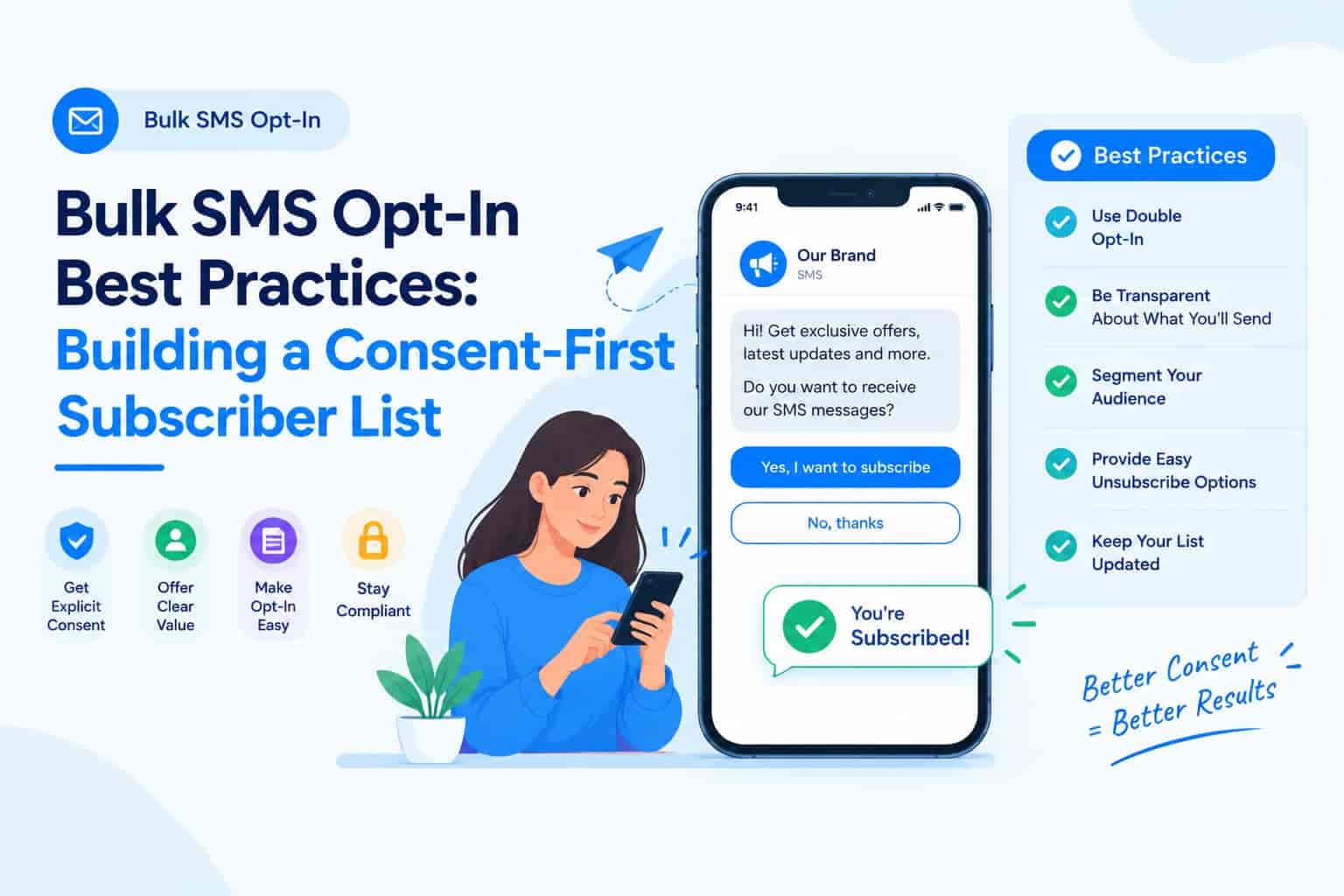
A compliant, trust-building opt-in makes three things clear to the subscriber at the moment they provide their number:
What they're signing up for — promotional offers, order updates, or both
How often they'll hear from you — setting realistic frequency expectations upfront
How to opt out — a clear, simple mechanism like replying STOP
Pre-checked consent boxes, bundling SMS opt-in into unrelated terms and conditions, or collecting numbers without any explicit consent step all create lists that look large on paper but perform poorly in practice, since recipients never genuinely agreed to receive marketing messages.
Where to Capture Opt-Ins Without Adding Friction
The best opt-in moments are ones that already involve the customer providing information, rather than separate dedicated sign-up forms that require extra effort. Checkout pages, in-store registration forms, loyalty program sign-ups, and post-purchase confirmation screens are all natural points to add a simple, clearly worded SMS opt-in checkbox without disrupting the primary task the customer came to complete.
Double opt-in — where a subscriber confirms their consent via a reply text after initial sign-up — adds one extra step but significantly improves list quality, since it filters out mistyped numbers and ensures the person genuinely wants to receive messages.
The Cost of Getting This Wrong
Lists built on weak consent consistently show higher opt-out rates, lower engagement, and increased spam complaints — all signals that damage sender reputation with carriers over time. A damaged sender ID can see messages throttled or blocked entirely, affecting even well-targeted, genuinely wanted campaigns sent to properly consented contacts on the same list.
The short-term appeal of a larger list built through loose consent practices rarely outweighs the long-term cost of a damaged sending reputation that takes months to rebuild.
Maintaining Consent Over Time
Consent isn't a one-time checkbox — it should be periodically reaffirmed, particularly for contacts who haven't engaged with any message in six months or more. A simple re-engagement text asking "Still want to hear from us? Reply YES to stay subscribed" both cleans the list and demonstrates respect for the subscriber's ongoing choice, rather than assuming indefinite consent from a signup that may have happened years earlier.
Conclusion
Strong opt-in practices are the foundation everything else in bulk SMS marketing is built on. Clear consent, transparent frequency expectations, and an easy opt-out mechanism don't just keep you compliant — they build a list of subscribers who genuinely want to hear from you, which shows up directly in higher engagement and lower complaint rates. Businesses that treat consent as a growth lever rather than a compliance hurdle consistently build more valuable, longer-lasting SMS programs.