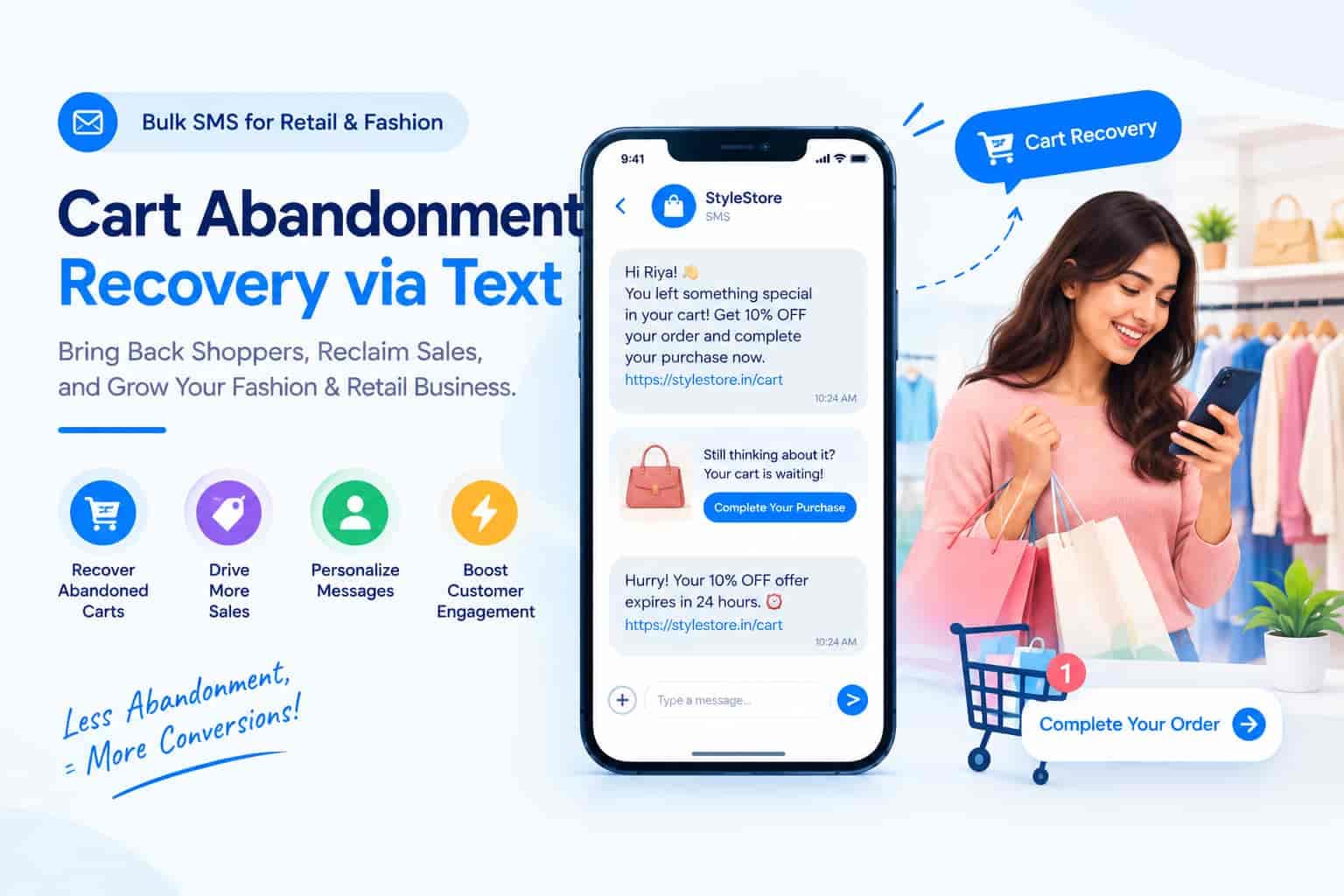
The Cart Abandonment Problem in Retail and Fashion
Most online shoppers who add an item to their cart never complete the purchase. For retail and fashion brands, this represents one of the largest pools of recoverable revenue available without spending a single rupee on new customer acquisition. Bulk SMS has become one of the most effective channels for recovering these abandoned carts, precisely because it reaches shoppers while the product is still fresh in their mind.
Why SMS Outperforms Email for Cart Recovery
Abandoned cart emails are easy to ignore, especially when they arrive hours after the shopper has moved on to other tabs or closed their laptop entirely. A cart recovery SMS sent within 30 to 60 minutes of abandonment catches the shopper while purchase intent is still high, often while they're still holding their phone having just browsed the site on mobile. This timing advantage is one of the biggest reasons SMS cart recovery campaigns consistently show higher conversion rates than their email equivalents.
Structuring an Effective Cart Recovery Sequence
Rather than a single reminder, well-performing fashion and retail brands use a short, escalating sequence:
First nudge (30–60 minutes): a simple reminder — "You left something in your cart"
Second message (24 hours): addressing common hesitations, like free shipping or easy returns
Final incentive (48–72 hours): a small discount or limited-time offer to close the sale
Spacing messages this way avoids overwhelming the shopper with repetitive texts while still maintaining enough presence to recover a meaningful share of abandoned carts across the full window.
Personalizing Cart Recovery Messages
Generic cart reminders perform noticeably worse than messages referencing the specific item left behind. Including the product name, and where possible a direct link back to the exact cart, removes friction from the recovery process — the shopper doesn't need to search for the item again, they simply tap through and complete checkout where they left off.
For fashion brands specifically, referencing size or color selected adds an extra layer of relevance, reminding the shopper of the exact item they were considering rather than a vague "your cart" reference.
Balancing Incentives Without Training Discount-Seekers
Offering a discount in every cart recovery message can train shoppers to deliberately abandon carts expecting a follow-up discount, which erodes margins over time. Many brands reserve the discount offer for the final message in the sequence only, letting the first two reminders rely purely on urgency and product relevance rather than price incentives, preserving margin on the share of shoppers who complete purchase after the first or second nudge alone.
Measuring Cart Recovery SMS Performance
Track recovery rate (the percentage of abandoned carts that convert after a recovery message), revenue recovered per message sent, and how performance varies across the three-message sequence. This data helps refine timing and messaging over time, and often reveals that the first nudge alone recovers a disproportionate share of the total, making it the most important message in the sequence to get right.
Conclusion
Cart abandonment is one of the most addressable revenue leaks in retail and fashion e-commerce, and bulk SMS's speed and directness make it one of the most effective tools for recovering it. A well-structured sequence — timely, personalized, and strategic about when to offer a discount — can recover a meaningful share of otherwise-lost sales without any additional ad spend. For fashion and retail brands not yet using SMS for cart recovery, it remains one of the highest-ROI additions available to an existing e-commerce stack.