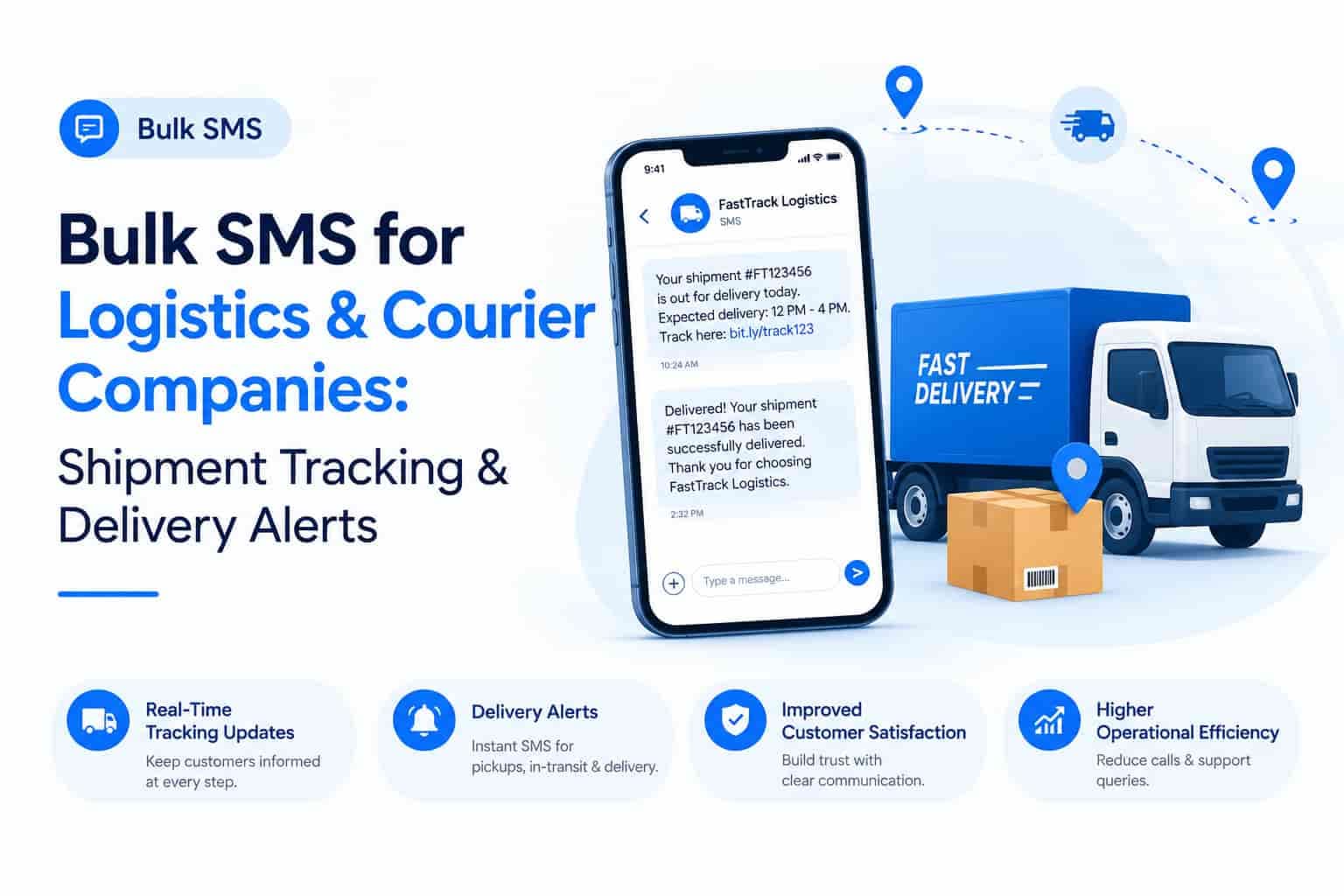
Why Logistics Companies Depend on Bulk SMS
"Where is my order?" is the single most common question a logistics or courier company fields every day. Bulk SMS answers that question before it's even asked, sending proactive updates at every stage of the shipment journey and dramatically cutting inbound support volume. A single well-timed text can eliminate dozens of support calls across a large delivery volume.
Unlike app notifications, which require the customer to have installed and opened an app, SMS reaches every recipient regardless of smartphone type or app usage, making it the most universal delivery-update channel available. For a courier network delivering across urban and rural areas alike, this universality is not optional — it's essential infrastructure.
Key Delivery Milestones Worth Automating
Most logistics providers automate SMS at these stages:
Order confirmed / shipment created — sets initial expectations and delivery timeline
Out for delivery — the highest-value alert, often including a delivery window
Delivery attempted / failed — with a reschedule or pickup link
Delivered confirmation — closes the loop and reduces disputes
Returned to origin — for undeliverable parcels, with clear next steps
Each of these is a transactional message, meaning it's expected by the customer and typically enjoys higher deliverability and fewer compliance restrictions than promotional SMS, since it's directly tied to an action the customer already initiated.
Reducing Failed Deliveries and Support Costs
A well-timed "out for delivery" SMS with an estimated time window significantly reduces missed deliveries, because customers can plan to be present rather than guessing when a courier might arrive. When a delivery does fail, an immediate SMS with a reschedule link lets the customer act without ever calling support, cutting both resolution time and call center load.
Some logistics companies go further, using two-way SMS to let recipients confirm a preferred delivery slot or redirect a parcel to a nearby pickup point — turning what used to be a phone call into a 10-second text exchange. This is particularly valuable in dense urban areas where delivery windows are tight and re-attempts are costly.
The Business Case Beyond Customer Experience
Beyond customer satisfaction, automated delivery SMS has a direct financial impact. Every failed delivery attempt costs a logistics company in fuel, driver time, and warehouse handling. Reducing failed-attempt rates by even a small percentage across a high-volume operation translates into meaningful operational savings, on top of the reduced support ticket volume.
Delivered-confirmation messages also reduce a common source of disputes — customers claiming non-receipt — by creating a timestamped record the business can reference, which is particularly valuable for e-commerce sellers managing chargebacks or refund requests.
Integrating SMS Into Your Logistics Workflow
Most modern logistics and courier management systems support SMS triggers via API, meaning each milestone update can be automated directly from your existing tracking system without manual sending. This keeps messaging consistent across every shipment and removes the risk of a milestone update being forgotten during high-volume periods like festival seasons.
Conclusion
For logistics and courier businesses, bulk SMS isn't a marketing add-on — it's core operational infrastructure. Automated alerts at every shipment milestone reduce failed deliveries, cut support call volume, and improve the customer's overall experience of your brand, even when a third-party courier is handling the actual delivery. Companies that haven't yet automated these touchpoints are leaving both cost savings and customer satisfaction on the table, particularly as delivery volumes and customer expectations continue to rise year over year.