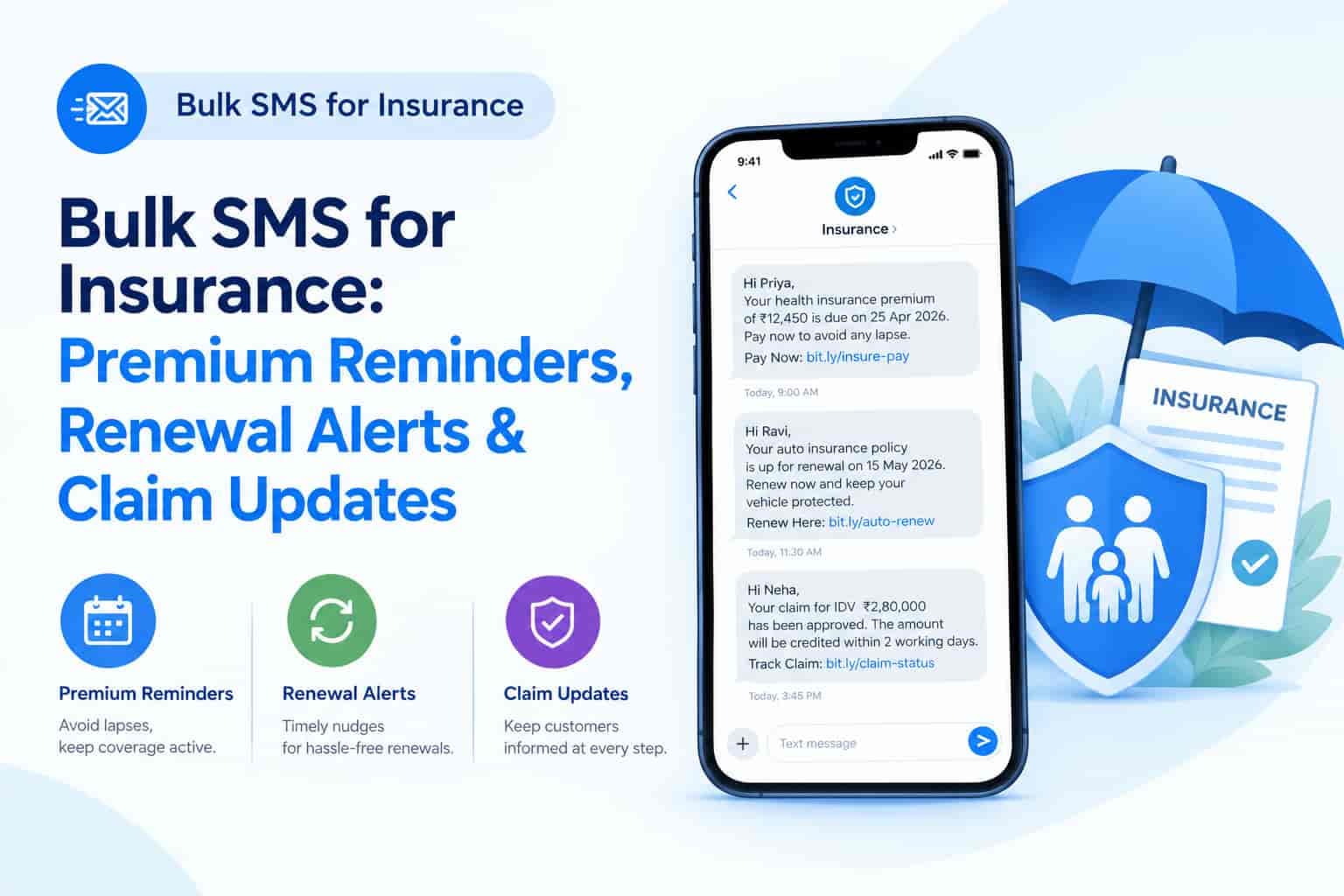
Insurance Runs on Deadlines — SMS Keeps Policyholders on Track
A lapsed policy is bad for both the insurer and the policyholder: the customer loses coverage they're paying for, and the insurer loses a renewed premium along with the relationship itself. Bulk SMS has become one of the most effective tools insurers use to keep policyholders informed and on schedule, precisely because premium due dates and renewal windows are exactly the kind of time-sensitive information SMS delivers best.
Key Moments in the Policy Lifecycle Worth Automating
Insurance companies and agents typically automate SMS around these recurring triggers:
Premium due reminders sent 7–10 days before the deadline, with a second reminder closer to the date
Policy renewal alerts well ahead of expiry, giving customers time to review coverage
Payment confirmations immediately after a premium is received
Claim status updates at each stage of processing, from submission to settlement
Policy document delivery links sent directly after issuance
Each of these messages reduces a common source of customer frustration — not knowing where things stand — while also reducing inbound calls to support and agent teams who would otherwise field these same questions manually.
Why Claim Updates Matter More Than Marketing Offers
For most policyholders, the claims process is the single most stressful interaction they have with an insurer, often following an accident, illness, or property loss. Proactive SMS updates throughout this process — confirming a claim was received, flagging that additional documents are needed, or confirming settlement — meaningfully reduce anxiety and the volume of "what's happening with my claim" calls, even when the underlying process itself hasn't sped up.
This kind of transactional, reassurance-focused messaging often does more for long-term customer retention than any promotional offer, because it addresses the moment when trust in the insurer is most at risk.
Renewal Campaigns That Actually Prevent Lapses
A single renewal reminder sent a day before expiry is rarely enough. Effective renewal sequences start 30 days out with a general notice, follow with a more specific reminder at 14 days including the exact premium amount, and close with an urgent final notice in the last 48 hours before lapse — giving customers multiple opportunities to act rather than relying on a single message landing at the right moment.
For lapsed policies, a short win-back sequence offering a grace period or simplified reinstatement process can recover a meaningful share of customers who simply missed the deadline rather than deliberately choosing not to renew.
Compliance Considerations Specific to Insurance
Because insurance messaging often involves sensitive financial and personal information, insurers must be especially careful about what details are included in an SMS — avoiding full policy numbers or sensitive health information in plain text, and directing customers to secure portals for anything requiring further detail. Premium reminders and claim updates are generally treated as transactional rather than promotional, which affects both sending time restrictions and the consent requirements involved.
Conclusion
For insurers, bulk SMS isn't just a marketing channel — it's an operational tool that keeps policies active, claims moving, and policyholders informed at the moments that matter most. Automated premium reminders, renewal sequences, and claim status updates reduce lapses, cut support call volume, and build the kind of trust that keeps customers renewing year after year. Insurers that treat SMS as core policy-servicing infrastructure, not just a promotional add-on, see measurably better retention as a result.