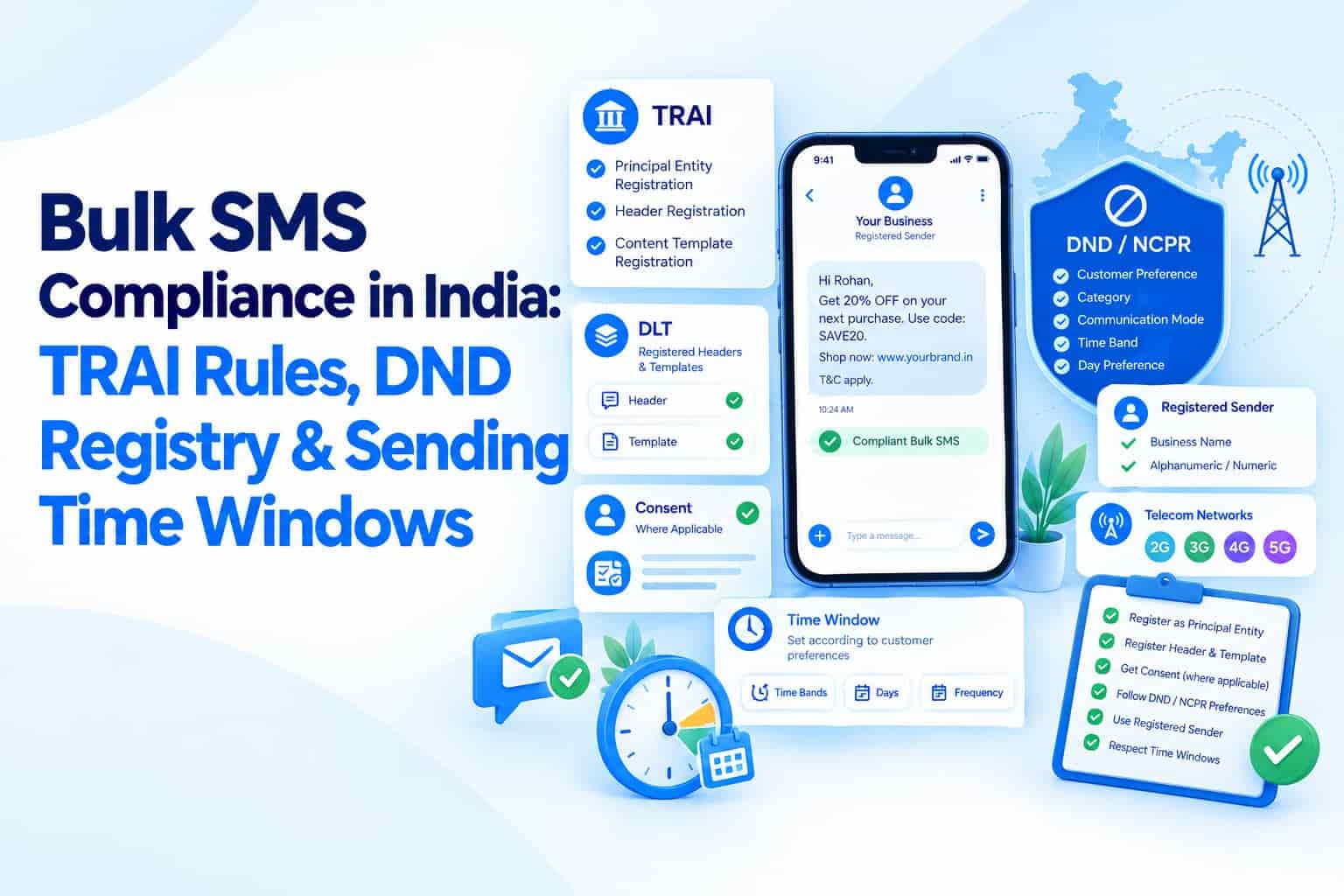
Why Compliance Can't Be an Afterthought
Sending bulk SMS in India means operating within a regulatory framework set by TRAI (Telecom Regulatory Authority of India). Ignoring these rules doesn't just risk fines — it can get your sender ID blocked entirely, halting every campaign you have running, including transactional messages your business depends on. Understanding the core rules is essential before scaling any SMS program, not something to figure out after a violation occurs.
The DND Registry and What It Means for Marketers
India's Do Not Disturb (DND) registry lets consumers opt out of receiving promotional communications, including SMS. Numbers registered under DND cannot legally receive promotional messages, though transactional and service messages — like OTPs or delivery alerts — are generally exempt because they're initiated by the customer's own action and are considered essential rather than promotional.
Businesses must check their contact lists against the DND registry before sending promotional campaigns, and reputable bulk SMS providers handle this filtering automatically as part of the sending process, scrubbing DND-registered numbers before a promotional campaign goes out rather than leaving this check to the business manually.
Sending Time Windows You Must Respect
Promotional SMS in India cannot legally be sent between 9 PM and 9 AM. This rule exists to prevent late-night or early-morning disturbances and applies regardless of how urgent a promotional offer might seem. Transactional messages, such as OTPs and account alerts, are not bound by this restriction since they're expected and time-critical, and delaying them until 9 AM would defeat their entire purpose.
Promotional SMS: only between 9 AM and 9 PM, opt-in required
Transactional SMS: any time, no DND restriction
Consent: must be clear and recorded before sending promotional content
Sender ID: must be registered and clearly identify the business
DLT Registration as the Foundation
Beyond DND and timing, India's Distributed Ledger Technology (DLT) framework requires businesses to register as an entity, register their sender IDs, and get message content templates pre-approved before sending. This system exists to prevent spam and fraud by ensuring every bulk SMS sender is traceable and every message template has been vetted in advance. Messages sent using unregistered templates are typically blocked by carriers before they ever reach the recipient, regardless of how well-intentioned the campaign is.
Practical Steps to Stay Compliant
Beyond DND and timing rules, businesses should maintain clear consent records showing when and how each contact opted in, honor opt-out (STOP) requests immediately rather than processing them in batches, and clearly identify their brand in every message so recipients always know who is contacting them. Working with a registered, DLT-compliant SMS provider ensures these safeguards are built into your sending infrastructure rather than managed manually across spreadsheets and separate systems.
Regularly auditing your contact list — removing numbers that have opted out, updating DND status, and retiring outdated consent records — keeps your compliance posture current rather than relying on a one-time setup that gradually becomes outdated as your list grows and changes.
What Happens When Businesses Get This Wrong
Non-compliant senders risk having their sender ID suspended by carriers, which can halt not just the offending campaign but every future message sent under that ID, including critical transactional alerts customers are actively expecting. Rebuilding a blocked sender reputation is a slow process, making upfront compliance far cheaper than remediation after the fact.
Conclusion
Compliance isn't just a legal checkbox for bulk SMS in India — it protects your sender reputation, your customer relationships, and your ability to keep sending campaigns at all. Respecting DND registrations, sending only within permitted hours, maintaining DLT-registered templates, and keeping clean consent records should be built into every campaign from the start. Businesses that treat compliance as a foundation, not an afterthought, avoid costly disruptions and build more trustworthy long-term SMS programs.