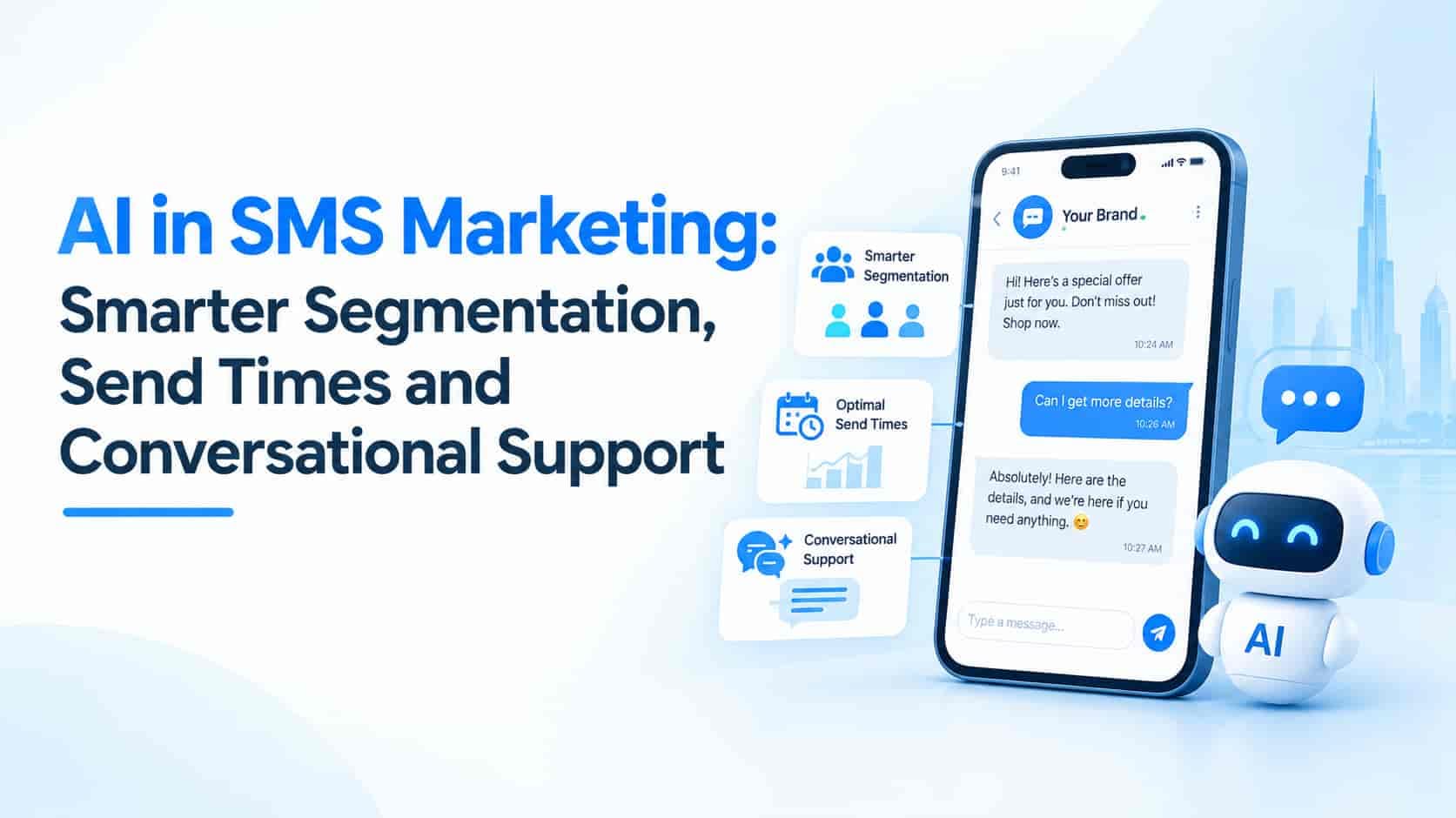
Artificial intelligence is changing how businesses plan and run messaging campaigns. From smarter targeting to automated replies, AI tools can improve relevance and efficiency, provided they are used with human oversight and respect for customer privacy. This guide explains where AI genuinely helps in SMS marketing, how to begin without taking unnecessary risks and which pitfalls deserve attention before you automate anything that speaks to your customers.
Predictive Segmentation
Traditional segmentation divides customers using fixed rules, such as location or last purchase date. Machine learning models can go further by analyzing purchase history, engagement and behavior to predict who is likely to buy, who may be about to stop engaging and which offers are likely to appeal to each person. Instead of static lists that quickly become outdated, you get dynamic segments that update as behavior changes. This allows you to send fewer, better-targeted messages, which usually improves results while reducing opt-outs and costs.
Send-Time Optimization
Most campaigns are sent at a single time chosen for convenience, even though customers differ widely in when they read their messages. AI-driven send-time optimization learns from past engagement when each contact is most likely to respond and schedules messages accordingly, within the sending windows allowed by regulations. The improvement can be meaningful for campaigns where timing matters, such as offers with a deadline, and it requires little effort once the system has enough data to learn from.
Copy Assistance
Generative AI can draft message variants, adjust tone, shorten wording to fit a single segment and suggest alternatives for testing. This can speed up creative work considerably, especially for teams producing many campaigns. The output should always be treated as a first draft. A human must check accuracy, brand voice, cultural suitability and compliance with advertising rules, and Arabic text deserves review by a native speaker, since automated translations can sound awkward or even change the meaning.
Conversational Automation
AI assistants can handle routine customer questions over two-way messaging, such as order status, opening hours, appointment changes or basic product information. This provides instant answers at any hour and frees staff for complex issues that need a human touch. The key is a clear handoff: the assistant should recognize when it cannot help and pass the conversation to a person smoothly, with the full context so the customer does not need to repeat themselves.
Reporting and Insights
AI can also help interpret results. It can summarize campaign performance, highlight unusual patterns and suggest hypotheses to test next, saving analysts time on routine reporting. It is useful for spotting that a particular segment responded unusually well or that delivery dropped on a specific network. These suggestions should be treated as prompts for investigation rather than final answers, since models can mistake coincidence for cause.
Practical Ways to Start
The best way to begin is small and measurable. Use AI to generate several versions of one campaign message and run an A/B test to see which performs better. Try send-time optimization on a single recurring campaign and compare it with a control group sent at your usual time. Pilot a chat assistant that handles only the five most frequent customer questions before expanding its scope. Each experiment gives you evidence about what works for your audience without exposing the whole business to risk.
Accuracy and Guardrails
Generative tools can invent details that sound plausible but are wrong, such as discounts you do not offer, policies that do not exist or deadlines that were never set. Verify every claim before a message goes out, and for conversational assistants, restrict what they are allowed to promise and ground their answers in your approved information. A single incorrect message sent to thousands of customers can cause confusion, complaints and even legal exposure.
Privacy and Data Protection
AI features rely on customer data, and that data must be handled lawfully and carefully. Understand where information is processed and stored, share only what is necessary and follow UAE data protection requirements that apply to your business. Check your provider's terms, make sure your consent wording covers the way you use data and avoid feeding sensitive personal information into tools without a clear understanding of how it is used.
Over-Personalization and Fairness
Personalization works best when it reflects information customers expect you to have, such as their name or a recent order. Messages that reveal inferred sensitive details can feel intrusive and damage trust. Models can also reflect biases present in their training data, which might lead to some groups being excluded from offers or treated differently. Review segments and outcomes regularly to make sure the system behaves fairly.
Keep Humans in Control
Decide in advance which decisions AI can make automatically and which need approval. Keep style guidelines so that messages preserve your brand voice rather than drifting toward generic text. Give customers an easy route to a human, and honor opt-outs instantly regardless of any prediction about their likelihood to buy. Technology should support the relationship between your business and its customers, never replace the judgment needed to look after it.
Conclusion
AI can make SMS marketing more relevant and efficient, from segmentation to timing to customer support. The best results come from starting small, testing against baselines, protecting customer data and keeping people responsible for the final message. Measure outcomes using the same standards you apply to any campaign, and keep what proves its worth. Used this way, AI becomes a practical assistant that helps your team do more of what works, rather than a risk that creates new problems.